
Your cart is currently empty!
Designer, Niche, Indie and Clone Explained
Designer, niche, indie and clone describe where a fragrance sits in the market, not how well it is made. Designer means a fashion or lifestyle brand selling at scale, usually under licence. Niche means limited distribution and higher prices. Indie means independent ownership. Clone means a fragrance openly built on another’s profile, which is lawful where no trademark is copied.
These four words carry more weight in fragrance discussion than any others, and none of them has a legal or technical definition. They are positions, and they are chosen. A brand can move between them without changing a molecule.
What does “designer fragrance” actually mean?
It means a fragrance sold under the name of a fashion, jewelry or lifestyle brand, in wide distribution, at a price point supported by advertising. The critical and largely invisible detail is that the fashion house usually does not run the fragrance business itself. It licenses the name.
Coty holds prestige fragrance licences for Burberry, Calvin Klein, Chloé, Davidoff, Gucci, Hugo Boss, Marc Jacobs and Tiffany & Co. Inter Parfums holds them for Montblanc, Jimmy Choo, Coach, Lacoste, Van Cleef & Arpels, Guess and Ferragamo. Euroitalia has held Versace since 2005 and Moschino since 1988. L’Oréal has held the Giorgio Armani beauty licence since 1988 and renewed it in 2018 through to 2050.
Licensing has a measurable cost, and one of the licensees is a public company that discloses it. In the first quarter of 2025, Inter Parfums recorded royalties of $28.1 million on net sales of $338.8 million, about 8.3% of sales, on top of advertising and promotion at 15.2% of sales. Its licences are, in its own words, “subject to certain minimum advertising expenditures and royalty payments as are customary in our industry.” Gross margin was 63.7%.
That is the structural reality behind designer pricing: a royalty to the name, a contractual advertising minimum, department-store margin, and a concentrate budget that has to fit under all of it.
What does “niche” actually mean, and who owns the niche brands?
Niche originally described brands that sold through few doors, made small batches, avoided mass advertising and put the fragrance rather than a celebrity at the center of the story. That description still fits some brands. It no longer describes the category, because the category was bought.
| Brand widely called niche | Founded | Current owner | Acquired |
|---|---|---|---|
| Byredo | 2006, Stockholm, by Ben Gorham | Puig (majority stake) | Announced 31 May 2022 |
| Penhaligon’s | London, 19th century | Puig | Owned by Puig |
| L’Artisan Parfumeur | Paris | Puig | Owned by Puig |
| Le Labo | 2006 | Estée Lauder Companies | Late 2014 |
| Editions de Parfums Frédéric Malle | 2000 | Estée Lauder Companies | Late 2014 |
| Kilian Paris | 2007 | Estée Lauder Companies | Announced February 2016 |
| Maison Francis Kurkdjian | 2009, by Francis Kurkdjian and Marc Chaya | LVMH (majority stake) | Announced 20 March 2017 |
| Creed | Disputed; see the note on Creed’s founding date below | L’Oréal | Kering 2023 for €3.5bn; transferred to L’Oréal on 31 March 2026 |
A note on Creed’s founding date. Creed markets a 1760 founding. Everything known about the company before about 1970 comes from Creed itself, and the fullest published challenge is Gabe Oppenheim’s book The Ghost Perfumer, which reports that none of the antique bottles, bills of sale, letters or perfumery equipment that survive for comparably old houses have been found for Creed. This article does not put a date on the company’s real beginning, because the registry records that would settle it could not be inspected.
Estée Lauder’s own rationale, as reported at the time of the Kilian deal, was that niche fragrance was taking share from mass players and growing at double digits. The acquisitions worked. The label did not change.
So when you buy Baccarat Rouge 540 or Byredo Gypsy Water, you are buying from LVMH and Puig respectively. That is not a criticism of either fragrance. It is a correction to the idea that niche means small.
What counts as indie, and how big is it?
Indie is the honest version of what niche used to mean: independently owned, not part of a beauty conglomerate, usually founder-run, usually distributed through a small number of accounts or direct to consumer. Ownership is the test, and it is the one test in this article that has a clear yes-or-no answer.
The segment is not marginal, but it is also not reliably sized in public. Share figures for independent brands circulate in trade reporting, attributed to market-research providers whose underlying releases are not public, and different providers define “indie” differently, so this article gives no number. What can be checked is ownership, one brand at a time. An indie brand still buys its concentrate from the same suppliers everyone else uses, or from a smaller compounder, and still fills at a third-party filler.
Indie is also the least stable label here, because success converts it. Byredo and Maison Francis Kurkdjian were both indie for over a decade before they were not.
What is a clone, dupe or “inspired by” fragrance, and is it legal?
This is where accuracy matters most, because two completely different things get called the same name.
A counterfeit copies a brand’s trademark, bottle and packaging and sells the product as if it were that brand. It is illegal in every major market, and it is fraud against the buyer.
An inspired-by fragrance, sometimes called a clone or dupe, is sold under its own name and trademark, with its own packaging, and does not pretend to be another brand. It is composed to resemble another fragrance’s smell. In the United States, that is lawful, and the reason is unusually clear. The USPTO’s own trademark manual states that “scents that serve a utilitarian purpose, such as the scent of perfume or an air freshener, are functional and not registrable.” A scent can be a trademark for products where it is incidental, which is why a plumeria scent was registrable for sewing thread in In re Clarke. It cannot be a trademark for perfume, because in perfume the scent is the product. Add the courts’ refusal to extend copyright to fragrances, and a perfume’s smell is simply not owned.
What is owned is everything around it. In Europe, the Court of Justice held on 18 June 2009 in L’Oréal v Bellure (Case C-487/07) that “smell-alike” comparison lists naming the original brands amounted to comparative advertising and could be restrained by the trademark owner, and that presenting goods as imitations was unlawful. The fragrances themselves were not the infringement; the lists were. US law treats comparative reference more permissively, which is why side-by-side reference lists are more visible in the American market than the European one.
Analytical chemistry makes the practice trivially easy. As one legal review of the industry puts it, gas chromatography-mass spectrometry means “one can learn with remarkable accuracy the formula of any fragrance,” and a smell-alike industry grew directly out of that capability.
The practical point for a buyer: a legitimately sold inspired-by fragrance is a different product with a similar smell, and it should be judged as one. A counterfeit is a different thing entirely and carries real risks.
What actually differs between the categories, and what does not?
| Dimension | Designer | Niche (conglomerate-owned) | Indie | Middle Eastern houses | Inspired-by brands |
|---|---|---|---|---|---|
| Who composes the juice | Major supplier, sometimes an in-house perfumer | Major supplier | Major supplier or small compounder | Major supplier or in-house lab | Own or contracted lab |
| Distribution | Department stores, mass retail, travel retail, online | Own boutiques and selective retail | Direct to consumer and selective retail | Own stores in the Gulf, marketplaces in the West | Marketplaces and discounters |
| Royalty to a name | Yes when licensed; Inter Parfums disclosed about 8.3% of net sales | Usually none; brand is owned | None | None | None |
| Contractual advertising minimum | Common in licences | No | No | No | No |
| Advertising load | High; Inter Parfums reported 15.2% of net sales | Moderate, weighted to retail experience | Low, often organic and creator-led | Low to moderate, heavily social | Minimal |
| Typical batch size | Very large | Smaller | Small | Very large for the bestsellers | Large |
| Concentration convention | EDT and EDP lines, flankers at higher concentrations | Often EDP or extrait only | Varies widely | Usually EDP, often oil versions alongside | Usually EDP or EDT |
| Raw-material budget per kilo | Not disclosed by any brand | Not disclosed | Not disclosed | Not disclosed | Not disclosed |
| Legal status | Lawful | Lawful | Lawful | Lawful | Lawful when no trademark or trade dress is copied |
The row that does most of the work is the last-but-one. Nobody publishes their raw-material budget. Every claim that niche uses “better ingredients” and designer uses “cheap synthetics” rests on an unpublished number. What is publishable, and published, is that both buy from the same seven suppliers.
The row that does the second most work is the royalty row. A licensed designer fragrance carries a cost that an owned brand does not, and that cost has nothing to do with the liquid.
Why is “niche” a market position rather than a quality tier?
Because the supply chain is shared. In the 2026 Fragrance Foundation awards alone, Dominique Ropion of IFF was credited on a Tom Ford ultra-luxury launch, a Miu Miu prestige launch and the Hall of Fame entry for Frédéric Malle’s Portrait of a Lady. Across the 2025 and 2026 cycles, Jérôme Epinette of Robertet was credited on both a Byredo fragrance and a Rare Beauty fragrance, and Marie Salamagne of dsm-firmenich on a Ralph Lauren men’s prestige launch and an Yves Saint Laurent Le Vestiaire exclusive.
There is no separate laboratory for niche. There is no separate perfumer roster. There is a different brief, a different budget, a different bottle and a different number of doors.
That said, the position does change the product in ways you can smell. Niche briefs are more likely to permit an unbalanced, loud or difficult accord, because they do not need to survive a mall-wide focus group. Designer briefs are shaped by scale: a fragrance that will be sold in fifty thousand doors is optimized for broad acceptability. Indie briefs are shaped by the founder’s taste. Those are genuine differences in intent, and they are more informative than any claim about ingredient quality.
Where do Middle Eastern houses sit on this map?
Awkwardly, because they do not fit a Western taxonomy built around licensing. Most are family-owned manufacturers, not licensees. Rasasi was founded in Dubai in 1979 by Abdul Razzak Kalsekar and manufactures in Jebel Ali Free Zone. Swiss Arabian was founded in 1974 by Hussein Adam Ali and describes itself as the first perfume house in the UAE. Ajmal was founded in 1951 in Assam, India, and moved to the Gulf in the 1970s. These are vertically integrated businesses: they own the brand, run the factory and, in several cases, run their own retail.
In category terms that makes them closer to indie than to designer, with the distribution scale of designer. Givaudan’s global head of fine fragrance has described the region’s brands as offering “affordable creations crafted by high-profile perfumers” and delivering quality at retail prices that “did not exist before.” Some of these houses build fragrances on familiar designer profiles and some do not; both practices coexist within single portfolios. That is covered in detail in the dedicated article.
How to place any brand on this map in six steps
- Find the owner. Search the brand name with “acquired by” and “annual report.” Ownership is public for every listed conglomerate and settles the indie question outright.
- Find the operator. If it is a fashion name, find out who holds the beauty licence. Coty, Inter Parfums, Euroitalia, L’Oréal and Puig all publish their portfolios.
- Count the doors. Check where you can legitimately buy it. Two boutiques and one department store is a different business from every drugstore in the country.
- Check the concentration line-up. A brand that sells one extrait behaves differently from a brand that sells an EDT, an EDP, a Parfum and an Elixir of the same idea.
- Look for a named perfumer and supplier. The Fragrance Foundation Awards credit brand, supplier and perfumer together, which is the fastest way to see that a niche launch and a designer launch came from the same lab.
- Ignore the word on the marketing. If steps one to five all say conglomerate-owned, widely distributed and heavily advertised, the brand is not niche in any meaningful sense regardless of what the copy says.
Myths worth correcting
“Niche means small and independent.” Most of the best-known niche names are owned by Puig, Estée Lauder, LVMH or L’Oréal. Independence is a separate question with a separate answer.
“Designer fragrances are made by the fashion house.” Usually not. They are made by a fragrance supplier and operated by a licensee. The fashion house collects a royalty and approves the result.
“Clone brands are counterfeit.” No. A counterfeit copies a trademark and deceives the buyer. An inspired-by fragrance sold under its own trademark, without copying packaging, is a lawful product. Conflating the two is inaccurate and unfair to the companies involved.
“Higher price means higher concentration.” Price and concentration are set independently. Plenty of expensive fragrances are eaux de toilette and plenty of inexpensive ones are eaux de parfum.
“Niche fragrances use naturals; designer fragrances use synthetics.” Both use both, from the same suppliers. Naturals and synthetics are also not a quality hierarchy, which is a separate topic.
“Indie means handmade.” Almost never. Independent brands typically brief a supplier or compounder and use a contract filler, exactly like a large brand, just at smaller volume.
The honest limits of this article
The economics here rest on one public licensee’s quarterly disclosure. Inter Parfums’ royalty rate of roughly 8.3% of net sales and advertising at 15.2% are real numbers for Inter Parfums in the first quarter of 2025; they are not an industry average, and rates vary by brand, term and territory. No brand in any category publishes its raw-material cost per kilo of concentrate, its batch sizes or its concentrate specification, so this article states the difference exists without quantifying it, and any source that quantifies it is estimating. Ownership details are accurate as of the sources cited, and fragrance licences change hands regularly: L’Oréal has the right to enter a fifty-year exclusive Gucci licence when Coty’s existing licence expires. Creed’s founding date is disputed rather than settled: the house’s pre-1970 history comes from the house, and the fullest published challenge to it is Gabe Oppenheim’s book The Ghost Perfumer, which reports finding none of the bottles, bills of sale, letters or equipment that survive for comparably old houses. This article does not assert a specific first-trademark date, because the registry record behind the commonly cited 1979 figure could not be inspected. Finally, the legal summary here describes the general position in the US and EU and is not advice; specific cases turn on packaging, naming and advertising conduct rather than on the smell.
What our own catalogue shows
The long tail is the part the four-category model hides. Of the 466 brands we can identify in our catalogue, 135 are represented by a single product and another 176 by between two and five — so roughly two thirds of the brands we carry amount to five references or fewer. Only nine carry more than fifty. Whatever “niche” is supposed to mean, it is not a small number of small houses: it is a very long tail of names with almost nothing behind them, sitting alongside a handful of names with hundreds of references each. Sorting brands by size tells you about distribution, not about how a fragrance was made.
We are not going to give you median prices for “licensed designer”, “conglomerate-owned niche” and “Middle Eastern house” as though those were fields in a database. They are not. They are the editorial categories this article has spent several thousand words arguing about, and assigning 466 brands to them would be our judgement dressed up as a measurement. Where a grouping is genuinely well defined — the Gulf houses, which are a small, named, closed set — we do publish the medians, in the Middle Eastern houses guide linked above. Across categories this loose, the honest answer is that price tracks distribution strategy and brand positioning, and there is no clean number to hang on it.
Bottles to try this on
Eight bottles that make the category argument concrete, two from each corner of it: a licensed designer pillar such as Versace Eros or Hugo Boss Boss Bottled; a conglomerate-owned niche fragrance such as Le Labo Santal 33 or Penhaligon’s Halfeti; a family-owned Gulf manufacturer such as Rasasi Hawas for Him or Swiss Arabian Shaghaf Oud; and a widely available Middle Eastern bestseller such as Lattafa Khamrah or Armaf Club de Nuit Intense Man.
Related reading
- who really makes your perfume — the supplier industry the label never mentions
- the Middle Eastern houses and how they differ — the houses, the price ladder and the inspired-by trade
- the checks that catch a counterfeit — label rules, cap and collar checks, and what to do next
- what actually drives a fragrance price — condition, channel, size and import rules
- what naturals and synthetics each actually do — behavior, supply and the quality myth
Common questions
What is the real difference between designer and niche perfume?
Distribution, ownership and marketing load, not who makes the juice. Designer fragrances are usually licensed fashion names in wide retail with contractual advertising minimums and royalties. Niche brands are usually owned rather than licensed, sold through fewer doors, at higher prices. Both buy their compositions from the same handful of suppliers.
Are niche perfumes actually better quality?
There is no published evidence for a quality gap, because no brand in any category discloses its raw-material budget. Niche briefs are more likely to allow an unusual or polarizing accord, since they do not need mass appeal. That is a difference in intent and risk tolerance, not in the skill or laboratory behind the work.
Is Le Labo still a niche brand if Estée Lauder owns it?
It depends which meaning you use. Estée Lauder acquired Le Labo in late 2014, so by the ownership test it is not independent. By the distribution and price test it still behaves like niche. The useful move is to say which test you mean rather than arguing about the word.
Are clone or dupe perfumes legal?
In the United States, yes, when they are sold under their own name and packaging. A perfume’s smell cannot be trademarked because, as the USPTO’s manual puts it, “scents that serve a utilitarian purpose, such as the scent of perfume or an air freshener, are functional and not registrable,” and courts have declined to grant fragrances copyright. Copying a brand’s trademark or packaging is a different matter and is illegal.
What is the difference between a dupe and a fake?
A fake copies a brand’s name, bottle and packaging and is sold as that brand. That is counterfeiting and fraud. A dupe or inspired-by fragrance is sold under its own brand, with its own packaging, and only resembles another fragrance’s smell. One deceives you about what you are buying; the other does not.
What does indie mean in fragrance?
Independently owned and not part of a beauty conglomerate, usually founder-run with limited distribution. Market-share figures for the segment circulate in trade reporting but trace to market-research releases that are not public, and providers define indie differently, so treat them with caution. Indie brands still brief external suppliers and use contract fillers, so indie describes ownership rather than production method.
Do designer brands pay to use their own name?
The fashion house collects rather than pays; the licensee pays. Inter Parfums, which holds licences for Montblanc, Jimmy Choo, Coach and others, recorded royalties of $28.1 million on $338.8 million of net sales in the first quarter of 2025, roughly 8.3%, plus contractual minimum advertising spend. That royalty is part of the retail price.
Where do Lattafa, Armaf and Rasasi fit in these categories?
They are family-owned manufacturers rather than licensees, which puts them structurally closer to indie, with distribution closer to designer. Rasasi was founded in Dubai in 1979 and manufactures there; Swiss Arabian dates to 1974; Ajmal to 1951. Treating them as a budget tier misreads what they are.
Does a higher price mean a stronger or longer-lasting perfume?
No. Price is set by brand position, royalties, packaging and advertising commitments. Concentration, longevity and projection are set by the formula and the concentrate percentage, which vary independently of price. Expensive eaux de toilette and inexpensive eaux de parfum both exist in quantity.
How do I check who owns a fragrance brand?
Search the brand name alongside “acquired” and check the acquirer’s press releases or annual report; conglomerates announce these deals. For fashion names, search for the beauty licence holder instead, since Coty, Inter Parfums, Euroitalia, L’Oréal and Puig publish their portfolios. Ownership and licensing are both matters of public record.
Shop the story
-
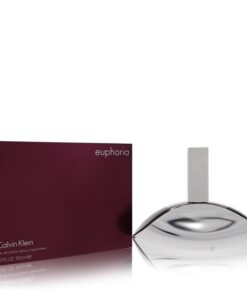
Euphoria by Calvin Klein Eau De Parfum Spray 3.3 oz (Women)
Original price was: $121.95.$82.16Current price is: $82.16. -
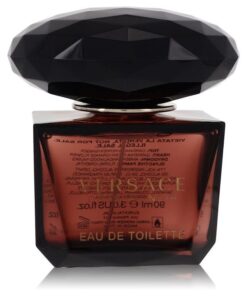
Crystal Noir by Versace Eau De Toilette Spray (Tester) 3 oz (Women)
Original price was: $102.95.$68.85Current price is: $68.85. -
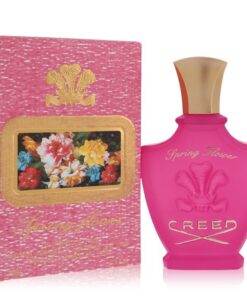
Spring Flower by Creed Eau De Parfum Spray 2.5 oz (Women)
Original price was: $312.95.$292.52Current price is: $292.52. -
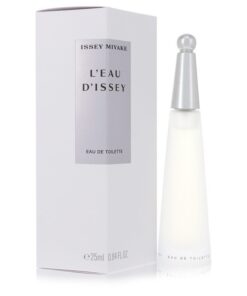
L’EAU D’ISSEY (issey Miyake) by Issey Miyake Eau De Toilette Spray .85 oz (Women)
Original price was: $60.95.$39.83Current price is: $39.83.
Keep reading