
Your cart is currently empty!
Why the Same Perfume Costs Wildly Different Amounts
The same fragrance can carry very different prices because it reaches the buyer through different channels. Authorized distribution builds in brand-set margins; parallel imports, closeouts, testers and unboxed units do not. Size, concentration, batch age and seasonal repricing explain most of the rest. Below a certain point, a low price stops signaling channel and starts signaling counterfeit.
Why does one retailer charge twice what another does for the same bottle?
Because the bottle took a different route to the shelf. A department store buys from the brand’s authorized distributor at agreed terms and is supported in return with training, testers, display furniture, cooperative advertising and a returns allowance. All of that is funded out of the price. A discounter often buys from a secondary source: stock a distributor in another market over-ordered, inventory from an account that closed, a reference the brand discontinued, or a parcel routed around the brand’s own price structure. The bottle is identical. The cost of getting it in front of you is not, and neither is the set of obligations attached to selling it.
That is the whole mechanism, and it is worth being blunt: most of the price difference between a department store and an online discounter is not a difference in the product. It is a difference in who paid for the retail experience.
What is the grey market, and is it legal?
Grey market, also called parallel import, means genuine branded goods sold outside the brand’s authorized distribution network. It is not counterfeit, and in the United States it is generally lawful.
The Second Circuit has stated the underlying principle directly: “Trademark law does not reach the sale of genuine goods bearing a true mark even though the sale is not authorized by the mark owner.” Once a brand has sold a bottle, it has generally exhausted its right to control who resells that bottle. This is the same first-sale logic that lets you resell a book or a car.
The Supreme Court applied the copyright version of the rule to exactly this kind of case in Quality King Distributors v. L’anza Research International. L’anza made hair care products with copyrighted label artwork and sold to foreign distributors at prices 35% to 40% below what it charged domestic ones. Product sold to a distributor in Malta made its way back into the United States and was resold through unauthorized retailers at discounted prices. The Court held the first sale doctrine applied, and that the importation right was limited by it. Once L’anza sold the goods, it had exhausted its distribution right, and subsequent owners could resell them in the US.
Two conclusions follow. A discounter selling genuine parallel stock is not doing anything unlawful, and a brand’s disapproval is not evidence a bottle is fake. Equally, grey market is not a synonym for bargain: it describes where a bottle came from, not whether it is good value.
How much does parallel distribution actually change the price?
The Quality King record gives an unusually concrete answer, because the price gap was litigated. L’anza charged its foreign distributors 35% to 40% less than its domestic distributors for identical product.
That gap is the reseller’s entire working capital. Everything the shopper eventually sees as a discount has to come out of it, alongside freight, import costs, currency risk, the reseller’s own margin and the retailer’s margin. Run the arithmetic with illustrative numbers to see how it lands. Suppose domestic distributor cost is $100 and the foreign equivalent is $62.50, the midpoint of that documented range. The parallel chain has $37.50 of headroom per unit. If it keeps two thirds of that as margin and cost recovery, the shopper sees roughly $12.50 off a $100 basis, or about 12%. If it keeps a third, the shopper sees about 25%.
Those are illustrative figures, not measurements, and they are here to make one point: a documented 35% to 40% gap at the distributor level supports a consumer discount in the region of 10% to 30%, not 80%. When a discount is dramatically larger than the channel gap can fund, the explanation is somewhere other than distribution. That usually means condition (tester, unboxed, damaged carton), age (old batch, discontinued reference), volume (a decant sold as a bottle), or counterfeit.
When is a parallel import actually a different product?
Sometimes it genuinely is, and US Customs has a formal process for that situation. This is the part of the grey market most buyers have never heard of, and the one that occasionally explains a real difference between two bottles bearing the same name.
Customs regulations restrict the importation of gray market articles that are physically and materially different from those the US trademark owner authorized for sale here. A trademark owner claiming that protection must state the basis with particularity and support it with competent evidence. The regulation lists what Customs will consider, including the specific composition of both the authorized and gray market product including chemical composition; formulation, product construction or composite components; performance and operational characteristics; differences resulting from legal or regulatory requirements and certification; and other explicitly defined factors likely to result in consumer deception.
Goods found to be materially different can still be imported, but only if labelled. The required statement is prescribed word for word: “This product is not a product authorized by the United States trademark owner for importation and is physically and materially different from the authorized product.” It must be conspicuous, legible, and placed in close proximity to the trademark as it appears in its most prominent location.
If you ever see that sticker on a fragrance carton, it is not a counterfeit warning. It is the opposite: a legally imported parallel unit, disclosed as required. It does tell you the US trademark owner has established that this version differs in some documented way from the version it authorizes for sale here, which is worth knowing before you compare prices. Most parallel fragrance in the US carries no such label, because most of it has not been found materially different.
Are you comparing the same size and the same concentration?
A large share of apparent price chaos is a comparison error rather than a market phenomenon, and two variables cause most of it.
Concentration comes first. Eau de toilette and eau de parfum sold under one name are different products with different material costs and prices. Neither term has a legal definition in the United States: FDA does not define fragrance concentration terms and does not approve fragrance products before they go on the market. The brand decides what to call a concentration and what to charge, so the only reliable reading is the concentration printed on the listing in front of you.
Size compounds it, because price per millilitre almost always falls as the bottle gets larger. A bigger bottle that looks expensive next to a small one is frequently the cheaper purchase.
| Listing (illustrative figures) | Total price | Price per ml | Which is actually cheaper |
|---|---|---|---|
| 30 ml eau de parfum | $72 | $2.40 | Most expensive per ml |
| 50 ml eau de parfum | $95 | $1.90 | Middle |
| 100 ml eau de parfum | $135 | $1.35 | Cheapest per ml, highest total |
| 100 ml eau de toilette | $110 | $1.10 | Cheapest overall, but a different product |
The figures above are an illustration of the arithmetic rather than any real product’s prices. The habit is what matters: convert every candidate to a price per millilitre, then check that you are comparing the same concentration, before you draw any conclusion at all. Our own catalogue makes the trap concrete. The median eau de parfum we list works out to about $0.88 per ml and the median eau de toilette about $0.59, which looks like a 49% premium for the stronger concentration. It is not. Those two medians describe different fragrances from different brands, and when you narrow to the 73 fragrances we stock in both concentrations, the same-name premium is about 13% per millilitre. The catalogue-wide gap is mostly telling you that expensive brands favour eau de parfum, which is a fact about brand positioning rather than about concentration.
What actually moves the price?
| Driver | Typical effect on price | How to verify it |
|---|---|---|
| Authorized versus parallel distribution | Large. Manufacturer price discrimination between markets has been litigated at 35% to 40% at distributor level | Check whether the retailer claims authorized status; compare three established sellers |
| Size | Price per ml usually falls as size rises | Convert every listing to price per ml before comparing |
| Concentration | Eau de parfum normally costs more than eau de toilette of the same name | Read the concentration on the listing, not the fragrance name |
| Condition: tester or unboxed | Lower than sealed retail for the same volume | The listing should state the condition in words |
| Batch age | Older stock is usually discounted | Ask for the batch code and look it up |
| Discontinuation | Can move either way; sought-after discontinued references appreciate | Check whether the brand still lists the reference |
| Reformulation | Older formulations of some references trade above current stock | Compare batch codes and packaging generation |
| Seasonal repricing | Short-lived; heaviest around gifting peaks | Track the same listing for two weeks before buying |
| Import and shipping costs | Rising where low-value parcel exemptions have been withdrawn | Check where the item ships from and whether duties are quoted |
Does an older batch justify a lower price?
Usually yes, and how much depends on the fragrance rather than on the calendar. Volatile top notes, typically citrus and light aromatics, degrade first. Woody, resinous and oriental compositions tolerate age comparatively well. A peer-reviewed review of essential oil stability found compositional change proceeding considerably faster under illumination than in darkness, and notes that a temperature rise of 10 degrees Celsius approximately doubles chemical reaction rates, which is why storage history matters more than the printed date.
Brands that discuss shelf life publicly give ranges rather than deadlines. Creed’s guidance is three to five years once opened, ideally used within two to three, with unopened bottles lasting considerably longer because they have had no exposure to oxygen. There is no US requirement for any of this to appear on a label: FDA states there are no US laws or regulations requiring cosmetics to have specific shelf lives or expiration dates, and calls shelf-life determination the manufacturer’s responsibility.
So a discount on older stock is rational, and it should be larger on a citrus cologne than on an aged oud. Discontinuation cuts the other way: once a reference is gone, remaining stock can appreciate, and sought-after discontinued bottles routinely sell above original retail.
What do “MSRP” and “list price” discounts actually mean?
Less than the percentage suggests, and the FTC has said so for decades. The Guides Against Deceptive Pricing set out three relevant rules.
On a retailer’s own former price, a comparison is legitimate only where the former price “is the actual, bona fide price at which the article was offered to the public on a regular basis for a reasonably substantial period of time.” Where no sales actually occurred at that price, the advertiser must still be able to show the product was “openly and actively offered for sale, for a reasonably substantial period of time, in the recent, regular course of his business.”
On comparisons with competitors, the advertised higher price “must be based upon fact, and not be fictitious or misleading,” and should reflect substantial sales at principal retail outlets rather than isolated small ones.
On manufacturer list prices, the Guides are blunt: a list price is a valid comparison only where “it is the price at which substantial (that is, not isolated or insignificant) sales are made in the advertiser’s trade area.” They also state that a manufacturer “may not affix price tickets containing inflated prices as an accommodation to particular retailers who intend to use such prices as the basis for advertising fictitious price reductions.”
The practical consequence is simple. Ignore the struck-through number. Build your own reference range from what several established retailers charge today, and measure every offer against that rather than against a figure the seller supplied.
How do import rules and shipping change the price?
They have moved, and they are now part of the answer to why identical bottles diverge. CBP processed more than 1 billion shipments under the de minimis value exemption in fiscal 2023, a channel that allowed low-value parcels to enter with minimal data and minimal cost. By March 2024, CBP reported that 85% of its cargo seizures originated as de minimis shipments. An April 2025 executive order closed that route for parcels from China and Hong Kong, requiring shipment details to be reported to CBP and duties to be paid regardless of value.
Two consequences matter at the checkout. A very low price supported by a duty-free direct-from-overseas parcel is a thinner proposition than it was, and a quoted price that excludes duties may not be what you end up paying. And delivery is part of the comparison, not a footnote: a listing that is $8 cheaper and charges $14 for delivery is not cheaper. Free delivery is common in US fragrance retail but it is not universal, minimum-order thresholds vary, and remote states frequently attract a surcharge, so put one landed total next to the other before you decide.
How low is too low?
There is no single threshold, but there is a shape to it, and the shape follows what each explanation can actually fund.
| Gap below established retail | What it plausibly means | What the listing should say |
|---|---|---|
| 0% to 20% | Ordinary promotional or competitive pricing | Nothing unusual required |
| 20% to 40% | Parallel import, closeout, or an online discounter’s normal margin | Condition of the unit; an identifiable seller |
| 40% to 70% | Tester, unboxed, discontinued reference, or noticeably older batch | The specific condition, named in words |
| More than 70% on a current release | Counterfeit, or a decant or split sold as a full bottle | No explanation is usually offered, which is itself the answer |
These bands are a rule of thumb drawn from how the discount market behaves, not a measured statistic. The FBI lists significantly lower pricing among its counterfeit indicators, so the deepest band deserves the most suspicion. The other thing a very low price can signal is volume: a 100 ml listing priced like a 10 ml one is often a decant or a split, meaning liquid transferred by a third party into another container. Plenty of Perfumes does not sell decants or split bottles in any form.
How to compare two prices properly
- Write down the exact reference: brand, fragrance name, concentration and size in millilitres.
- Convert each candidate price to a price per millilitre. Compare those numbers, not the totals.
- Confirm both listings are the same concentration. If one is eau de toilette and one is eau de parfum, you are not comparing prices, you are comparing products.
- Note the stated condition of each unit: sealed retail, tester or unboxed. An unstated condition is a gap in the information, not a bargain.
- Add delivery, any remote-state surcharge, and any duties the quoted price excludes.
- Read both return policies, including who pays return postage on a change of mind and whether a restocking fee applies.
- Ask for the batch code where the seller will share it, so you know roughly how old each unit is.
- Check where each ships from, since a direct overseas parcel carries different duty and delivery risk from domestic inventory.
- Only now look at the MSRP, and treat it as marketing rather than as a reference price.
What price alone cannot tell you
Price cannot tell you whether a bottle is genuine, and this is the most important limit of all because it cuts both ways. Counterfeit sellers price high as well as low, precisely because buyers use price as a proxy for authenticity. A fake sold at 25% off looks exactly like legitimate grey-market stock on a search results page, and a fake priced at full retail on a professional-looking site defeats the low-price heuristic entirely. Price is a screening signal, not a verdict.
The inverse belief is equally wrong. Buying from an authorized retailer buys you brand-supported service, returns handling and, where a brand offers one, access to its own goodwill. It does not mean that an unauthorized retailer is selling something different. Both can be selling identical bottles from the same production run, and courts have repeatedly confirmed that reselling genuine goods outside the authorized network is lawful in general terms.
Price also cannot tell you how a bottle was stored, which frequently matters more than how old it is. It cannot tell you whether a reference has been quietly reformulated, since brands rarely announce that and packaging often does not change. It cannot tell you whether a parallel unit was produced to a different market specification, unless it carries the Customs label that says so. And it cannot tell you the seller’s identity, which is the variable most worth resolving before you pay.
What a price can usefully be paired with is disclosure. Condition is the part of a listing that does most of that work: across the 3,751 bottles we currently list, about 93% are sealed retail units, around 5.6% are marked as testers and about 1.4% as unboxed. A price attached to a stated condition is a comparable price. A price attached to no condition at all is a number without a unit, and no amount of arithmetic will fix that.
Bottles to try this on
Fragrances where running the like-for-like comparison above is most worth the five minutes: Dior Sauvage Eau de Parfum, Coco Mademoiselle, Creed Aventus, Jean Paul Gaultier Le Male, Tom Ford Tobacco Vanille, Acqua di Gio in its largest format.
Related reading
- how to spot a fake bottle — label rules, cap and collar checks, and what to do next
- the tester bottle explained — the same liquid, a plain carton and usually no cap
- what an unboxed bottle really means — what you lose with the carton, and what discount is fair
- dating a bottle from its batch code — the step-by-step method, and why decoders disagree
- how the Gulf fragrance industry works — the houses, the price ladder and the inspired-by trade
- how bottle sizes and price per millilitre work — conversions, price per millilitre and carry-on limits
Common questions
Why is the same perfume so much cheaper on some websites?
Usually because the bottle reached that seller outside the brand’s authorized distribution. Brands charge different prices in different markets, so genuine stock bought abroad, from a closed account or from a discontinued line can be resold below US retail. Testers, unboxed units and older batches sit lower again. The liquid is the same; the route is not.
Is grey market perfume fake?
No. Grey market means genuine branded goods sold outside the authorized network, and in the United States it is generally lawful. What can differ is specification: US Customs restricts import of parallel goods found physically and materially different unless they carry a prescribed label saying so. Grey market is a channel question, not an authenticity question.
Does a much lower price always mean a counterfeit?
No, but it is the strongest single warning signal the FBI lists. Discounts of 20% to 40% below department store pricing are routine for genuine parallel and closeout stock, and deeper cuts are plausible for testers, unboxed bottles and discontinued references. A current release at a fraction of everyone’s price with no stated condition is the pattern to avoid.
Why does eau de parfum cost more than eau de toilette?
Because it normally carries more fragrance material per bottle, which costs the brand more to make. Neither term has a legal definition in the United States, and FDA does not define concentration names or approve fragrance products before sale. The brand sets both the designation and the price, so compare concentrations explicitly rather than by name.
Should I trust a big discount off MSRP?
Treat it as marketing. The FTC’s pricing guides say a list price is a legitimate comparison only where substantial sales actually occur at that price in the advertiser’s trade area, and warn against inflated price tickets used to advertise fictitious reductions. Build your own reference range from what several established retailers charge today.
Does an older batch mean a worse bottle?
Not automatically, and sometimes the opposite. Age matters most for citrus-led and delicate floral compositions, whose top notes fade first, and least for woody, resinous and oriental ones. Storage matters more than the date. Some discontinued or reformulated references trade above current stock precisely because collectors want the older batch.
Is it worth paying more to buy from an authorized retailer?
Sometimes, and for reasons other than authenticity. What you buy is brand-supported service, returns handling and access to any goodwill the brand offers. You are not buying a different bottle: reselling genuine goods outside the authorized network is lawful in general terms, and both channels can be selling stock from the same production run.
Why do prices jump around during the year?
Because fragrance is heavily gift-driven, so promotional pressure clusters around gifting peaks and eases afterwards. Parallel and closeout supply also arrives in irregular batches rather than continuously, which makes discounter pricing move more than department store pricing. Watching a single listing for two weeks before buying usually reveals whether a price is a floor or a promotion.
Do tariffs and import rules affect what I pay?
Increasingly. CBP processed more than 1 billion low-value de minimis shipments in fiscal 2023, and an April 2025 executive order closed that exemption for parcels from China and Hong Kong, requiring shipment details and duties regardless of value. A quoted price that excludes duties on a direct overseas parcel may not be the final price.
Is a very expensive listing more likely to be genuine?
No, and assuming so is a common mistake. Counterfeit sellers price high as well as low, because they know buyers read price as a proxy for authenticity. A fake at full retail on a polished website defeats the low-price heuristic completely. Use price to screen, then verify the seller’s identity, the stated condition and the batch codes.
Shop the story
-
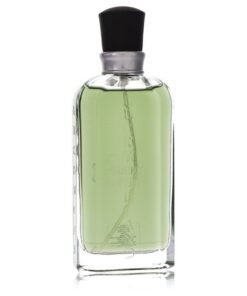
Lucky You by Liz Claiborne Cologne Spray (Tester) 3.4 oz (Men)
Original price was: $61.95.$28.72Current price is: $28.72. -
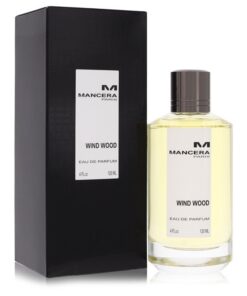
Mancera Wind Wood by Mancera Eau De Parfum Spray 4 oz (Men)
Original price was: $167.95.$148.35Current price is: $148.35. -
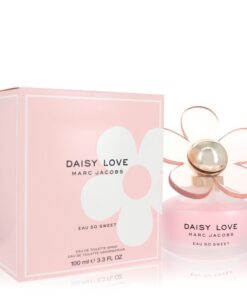
Daisy Love Eau So Sweet by Marc Jacobs Eau De Toilette Spray 3.3 oz (Women)
Original price was: $144.95.$81.12Current price is: $81.12. -
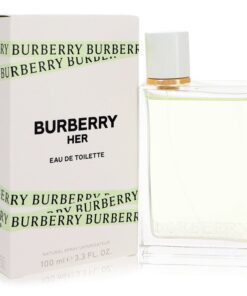
Burberry Her by Burberry Eau De Toilette Spray 3.4 oz (Women)
Original price was: $152.95.$134.85Current price is: $134.85.
Keep reading