
Your cart is currently empty!
Do Perfumes Expire? Shelf Life Explained
Perfume does not expire on a fixed date. It degrades gradually through oxidation, light and heat. Citrus and other light top notes are the most reactive and change first, while woods, resins and musks are far more stable. No public dataset gives a lifespan for any particular fragrance, and storage conditions matter more than age.
The word “expiry” is borrowed from food, and it misleads people. Milk crosses a line on a particular day. Perfume slides down a slope, the slope is much steeper for some compositions than others, and the part that degrades first is rarely the part you bought the fragrance for.
Why do most perfumes carry no expiry date?
Because they are not required to, and because most are assessed as stable for longer than the threshold at which a date becomes mandatory anywhere.
In the United States the Food and Drug Administration is explicit: “There are no regulations or requirements under current United States law that require cosmetic manufacturers to print expiration dates on the labels of cosmetic products.” Responsibility sits with the producer, which has “the responsibility to determine shelf life for products, as part of their responsibility to substantiate product safety.” A manufacturer that fails to establish shelf life may render a product adulterated or misbranded, so the obligation is real even though the label requirement is not.
The FDA is equally clear about what a date would mean if it were there. Expiration dates are “simply rules of thumb,” and a product’s safety “may expire long before the expiration date if the product has not been properly stored.” Cosmetics “exposed to high temperatures or sunlight, or opened and examined by consumers prior to final sale” may deteriorate substantially before the printed date. Going the other way, “products stored under ideal conditions may be acceptable long after the expiration date has been reached.”
European rules supply the other half of the picture, and they contain the only hard number in this whole subject. Under Regulation 1223/2009, a date of minimum durability “shall not be mandatory for cosmetic products with a minimum durability of more than 30 months.” Products above that threshold instead carry a period-after-opening symbol, “except where the concept of durability after opening is not relevant.”
So a perfume box with no date on it is not an oversight or a shortcut. In most cases it means the manufacturer has assessed the product as stable beyond 30 months. That is a floor, not a ceiling, and it tells you nothing about how the particular bottle in your hand has been treated since it left the factory.
What actually degrades in a bottle of perfume?
Three processes do nearly all the work, and they run in parallel rather than in sequence.
Oxidation
Oxygen in the bottle reacts with unsaturated aroma molecules to form peroxides and hydroperoxides, then further breakdown products. This is the best-documented pathway, and the fragrance industry treats it as a safety matter rather than only a quality one.
The International Fragrance Association sets standards for limonene and linalool, two of the most widely used materials in all of perfumery. Both standards require that products “should have a peroxide value of less than 20 millimoles per litre,” and both give the same reason: “oxidation products of limonene, especially hydroperoxides, have been demonstrated to be potent sensitizers,” with identical wording in the linalool standard. Both recommend antioxidant protection, noting that “the addition of 0.1% BHT or alpha-tocopherol for example has shown great efficiency.”
The practical consequence is that a badly oxidized fragrance is not merely a disappointing one. Its capacity to provoke a skin reaction has increased.
Photodegradation
Light drives isomerization and oxidation directly, independently of temperature. A review of essential oil stability found that in fennel oil stored at room temperature under light, trans-anethole “had completely oxidized to anisaldehyde or isomerized to cis-anethole” after just two months. In lemon oil, compositional change happened in darkness as well, but “proceeded considerably faster when illumination was involved.” Rosemary oil was “very susceptible to imitated daylight.”
Clear glass is close to no protection at all. Comparative data in a European patent on ultraviolet-absorbing bottle glass gives soda-lime-silica glass without a UV-absorbing additive, measured at 3.5 mm thickness, a transmittance of “no less than 84.2%” at 350 nm and 61.6% at 330 nm. That is beverage-bottle glass rather than a perfume bottle, so treat it as an order of magnitude rather than a measurement of your own bottle: most of the near-ultraviolet arriving at clear glass goes straight through it.
Heat
Chemical reaction rates roughly double for every 10 degrees Celsius of warming, the van’t Hoff relationship. A bottle kept at 30 degrees ages about twice as fast as one kept at 20, and one that spends afternoons at 40 degrees on a sunny sill ages about four times as fast. That is an approximation rather than a law for any specific reaction, but it is the right order of magnitude and it explains why identical bottles in different homes end up in different condition.
Which parts of a fragrance go first, and why?
The pattern is chemical, and it maps almost exactly onto the structure of a fragrance. The table below describes mechanism and consequence. It deliberately gives no durations, for reasons set out in the next section.
| Material class | Typical examples | Why it is vulnerable | What you notice |
|---|---|---|---|
| Citrus terpenes | Limonene, citral, terpinene | Small, highly volatile, multiple unsaturated bonds; readily form hydroperoxides | Opening flattens, then turns sour or metallic |
| Linalool-type alcohols | Linalool, linalyl acetate | Unsaturated and oxidation-prone; IFRA caps their peroxide value for this reason | Fresh floral lift dulls; can sharpen |
| Aldehydes | Fatty aldehydes in aldehydic florals | Reactive carbonyls, prone to autoxidation | Sparkling opening turns waxy or stale |
| Delicate florals | Natural jasmine, rose absolutes | Complex mixtures containing several of the classes above | Loses dimension, flattens toward one note |
| Woods and roots | Sandalwood, vetiver, patchouli | Larger, heavier, far less volatile, more saturated | Very little change; some deepen |
| Resins and balsams | Labdanum, benzoin, amber accords | Heavy and chemically stable | Essentially stable |
| Synthetic musks | Galaxolide, ethylene brassylate | Designed for substantivity and stability | Essentially stable |
Read down the table and the practical rule appears on its own: a fragrance degrades from the top down. The first ten minutes are built from exactly the materials that are most reactive and most volatile, and the base is built from the most stable. This is why an old bottle so often smells wrong at the moment you spray it and entirely correct twenty minutes later.
Can you put a number of years on it?
Not honestly, and this is where most writing on the subject overreaches.
The only hard figure anywhere in the regulatory or scientific literature is the EU’s 30-month threshold, and that is a labeling trigger rather than a measurement of how long a fragrance smells right. Manufacturers hold real stability data on their own formulas, generated by accelerated and real-time testing, and they do not publish it. The published stability research on aroma materials was largely conducted on neat essential oils rather than on alcoholic perfume, where those materials are diluted in ethanol and sealed under a crimped collar. There is no public dataset giving per-composition lifespans for finished perfumes.
What can be stated with confidence is the ordering. The table below ranks composition types from most to least fragile. The ranking follows directly from the material chemistry above. It is a relative ordering, not a set of durations, and it should be read as “which of two bottles will change first,” not as “how many years you have.”
| Rank | Composition type | Dominant materials | Relative fragility |
|---|---|---|---|
| 1 (most fragile) | Citrus cologne, eau fraiche | Almost entirely citrus terpenes | Highest; the fragrance is its top notes |
| 2 | Fresh aromatic, green, aquatic | Linalool-type alcohols, light synthetics | High |
| 3 | Aldehydic and delicate floral | Aldehydes, natural absolutes | Moderately high |
| 4 | Fougere, chypre, modern designer blends | Mixed, with a substantive base | Moderate; top shifts, base holds |
| 5 | Woody, amber, gourmand | Woods, resins, vanillin, musks | Low |
| 6 (most durable) | Oud, heavy oriental, extrait concentrations | Heavy naturals and resins, minimal volatile top | Lowest; color often changes before smell does |
If you want a single planning convention rather than a measurement, the useful one is this: buy ranks 1 and 2 in a size you will finish within a year or so, and buy ranks 5 and 6 in whatever size makes sense financially. That is a purchasing heuristic drawn from the ordering above, not a shelf-life claim.
How can you tell a perfume has turned?
Use your nose first and your eyes second. Color change on its own is weak evidence, because many fragrances darken naturally with age and several common materials darken on light exposure without the scent changing much.
- Spray onto paper, not skin. Skin adds body odor and warmth that confuse the assessment. A plain white blotter or card is neutral.
- Smell at ten seconds. Degradation shows up first in the opening. A sour, vinegary, metallic or wet-cardboard note where citrus or aldehydes used to be is the clearest single signal.
- Smell again at fifteen to twenty minutes. If the heart and base smell as you remember, the durable part of the composition is intact and only the top has gone. That is normal aging, not spoilage.
- Compare against a known reference if you have one. A newer bottle of the same fragrance, or a sample, makes small shifts obvious that are invisible in isolation.
- Check the liquid against white paper. Marked darkening together with a sour opening points to genuine oxidation. Darkening alone frequently does not.
- Look for cloudiness or visible particles. Real haze or sediment is uncommon in alcoholic fragrance and is a reason to stop using the bottle.
- Stop if it stings. Because oxidation products of common fragrance materials are established sensitizers, new irritation from a bottle you previously wore without trouble is a reason to retire it rather than push through.
Which beliefs about perfume expiry are wrong?
“Perfume goes bad after three years”
There is no such cliff. The three-year figure in circulation appears to be a folk translation of the EU’s 30-month labeling threshold, which is a rule about when a date becomes mandatory, not a finding about when a fragrance stops smelling right. A heavy amber at five years may be indistinguishable from new. A citrus cologne at eighteen months may already have lost what made it worth buying.
“If it has gone darker, it has gone off”
Weak evidence on its own. Darkening is common and often benign; several natural materials deepen in color over time regardless of whether the odor profile has shifted. Color change matters when it appears alongside a sour or metallic opening. Alone, it is not a verdict.
“Old perfume can be refreshed or revived”
It cannot. Oxidation is not reversible at home, and the volatile materials that have evaporated or reacted are gone. Adding alcohol dilutes what remains and changes the balance the perfumer set. Warming, shaking or decanting does nothing to restore lost top notes.
“Perfume can go moldy or grow bacteria”
Not in any normal sense for an alcoholic fragrance, which is a poor environment for microbial growth. The genuine risk from an old bottle is chemical rather than microbiological, and it is skin sensitization from oxidation products. Visible haze or sediment in an alcoholic perfume is unusual enough to be worth taking seriously, but it is not mold.
“An unopened bottle does not age”
It ages more slowly, not not at all. A sealed bottle still contains a headspace of air, still sits at whatever temperature its surroundings are, and is still subject to light if it is stored in clear glass on a shelf. Sealed retail stock warehoused properly is in the best condition available, which is a reason to care where a bottle has been, not a reason to assume time stopped.
Is old perfume dangerous to wear?
Usually not, but the risk is specific and worth naming rather than waving away. The concern is not spoilage in the food sense. It is skin sensitization from peroxides and hydroperoxides formed as materials oxidize, which is precisely why IFRA caps peroxide values in the raw materials before they ever reach a formula.
The practical position: an old bottle that smells right is fine. An old bottle that smells sour and causes itching, redness or stinging on skin that previously tolerated it should be thrown away. A degraded fragrance is not only a cosmetic disappointment, and a bottle you already suspect is not worth testing on your neck.
Troubleshooting: my new bottle smells different from my last one
This is the most common real-world version of the expiry question, and degradation is only one of four possible causes. Work through them in order.
Reformulation. Fragrances are reformulated, sometimes substantially, when materials are restricted, become uneconomic, or simply change supplier. A genuine difference between a bottle bought years apart is at least as likely to be reformulation as degradation, and no amount of smelling will distinguish the two without a reference.
Degradation in the older bottle. If the older bottle is the one that smells wrong at the opening but correct at twenty minutes, that is the top-down pattern described above and it points to age, not to a changed formula.
Degradation in the newer bottle. Retail stock can be old stock. A bottle can be recently purchased and years from its fill date, or can have spent months in a hot warehouse or a sunlit display. Checking the batch code against the packaging is the way to establish the age of what you actually received.
Your nose. Perception is not stable. Adaptation, a cold, ambient temperature and simply having worn the fragrance a great deal all change what you register. Testing against a reference on paper, on a day when you have not been wearing it, removes most of this.
What cannot be established
The mechanisms in this article are well documented, the regulatory position is a matter of public record, and the relative ordering of fragile and durable compositions follows directly from the chemistry. Those parts are solid.
What is not available is a measured lifespan for any specific fragrance. No public dataset gives per-composition durations, and the stability research that does exist was mostly performed on neat essential oils rather than on finished alcoholic perfume. Dilution in ethanol under a sealed crimp almost certainly makes a real perfume more stable than that research implies, which means the essential-oil findings should be read as showing the direction of an effect rather than its size. Anyone quoting you a precise number of years for a named fragrance is estimating, whether or not they say so.
The honest summary: storage beats age, composition beats both, and your own nose on a paper strip beats any table in any article, including the ones above.
When buying, favor stable compositions for large bottles and long horizons. Amber and woody fragrances such as Tom Ford Tobacco Vanille tolerate years of slow use. Bright citrus styles such as Acqua di Parma Colonia reward a smaller bottle and faster turnover. Mid-range designer compositions such as Bleu de Chanel Eau de Parfum sit between the two. Condition also matters, since sealed retail stock ages more slowly than an opened bottle: check whether a listing is sealed, unboxed or a tester before you buy. For scale: of the 3,954 bottles we list, about 93% are sealed retail units, around 5.6% are marked as testers and about 1.4% as unboxed. The overwhelming majority of what you see anywhere is boxed retail stock, and where condition wording does appear on a listing it is worth reading rather than skimming. Those shares are inferred from how listings are titled; no retailer’s product data carries a condition field that distinguishes a tester from a sealed unit.
Related reading
- how to store perfume so it keeps — heat, light, air and the bathroom problem
- how to read a batch code and date a bottle — the step-by-step method, and why decoders disagree
- why the same perfume smells different on other people — body odor, receptor genetics and adaptation
Common questions
Does perfume expire?
Not on a fixed date. Perfume degrades gradually through oxidation, light and heat rather than spoiling. The volatile top notes go first, particularly citrus, while woods, resins and musks stay recognizable for far longer. Storage conditions matter more than age: a well-stored older bottle routinely outperforms a badly stored newer one.
How long does perfume last unopened?
There is no published figure, and the only regulatory anchor is the EU threshold at which a date becomes mandatory: 30 months. Most manufacturers assess fragrance as stable beyond that, which is why no date appears. An unopened bottle kept cool and dark ages slowly but does still age.
Can you use 10 year old perfume?
Often yes, particularly woody, amber, resinous and vanilla compositions, which are built from chemically stable materials. Spray onto paper and smell the opening. If it reads sour, metallic or like wet cardboard, or if it irritates your skin, stop using it. Oxidation products of common fragrance materials are recognized skin sensitizers.
Why doesn’t perfume have an expiration date on the box?
US law does not require expiration dates on cosmetics, and the FDA places responsibility on manufacturers to determine shelf life themselves. EU rules waive the date entirely for products with minimum durability above 30 months, which covers most fragrance. No date generally means assessed as stable for longer, not untested.
How can you tell if perfume has gone bad?
Spray onto white paper and smell immediately. A sour, vinegary or metallic opening where citrus or aldehydes used to be is the strongest sign. Smell again at twenty minutes: if the base is intact, only the top notes have aged. Darkened color on its own is weak evidence, since many fragrances darken naturally.
Which perfumes last the longest in the bottle?
Compositions built on heavy, stable base materials: oud, amber, resins, patchouli, vanilla, woods and synthetic musks. Those materials are larger, less volatile and more saturated than top notes. The most fragile are citrus colognes and fresh aromatics, whose character depends on small reactive molecules such as limonene and citral.
Does perfume go bad faster once opened?
Yes, for two reasons. Each use draws air into the bottle, and a growing headspace of oxygen accelerates oxidation. Opened bottles also tend to live in warmer, brighter places than sealed stock sitting in a box. The pump itself seals reasonably well, so the effect is gradual rather than sudden.
Can you fix or refresh old perfume?
No. Oxidation is not reversible at home, and the volatile materials that have evaporated or reacted cannot be replaced. Adding alcohol only dilutes what remains and shifts the balance the perfumer set. Warming, shaking and decanting do nothing for lost top notes. The durable base is usually still intact and worth wearing.
Is it safe to wear expired perfume?
Generally yes if it smells right. Alcoholic fragrance is a poor environment for microbes, so spoilage is not the concern. The real risk is skin sensitization from peroxides formed during oxidation, which is why IFRA caps peroxide values in raw materials. New itching or stinging from a previously tolerated bottle means stop.
Why does my new bottle smell different from the last one I bought?
Four possible causes, in rough order of likelihood: the fragrance was reformulated, the older bottle has degraded at the top, the newer bottle is old retail stock, or your own perception has shifted. Comparing both on paper strips on a day you have not worn either separates the first three from the fourth.
Shop the story
-
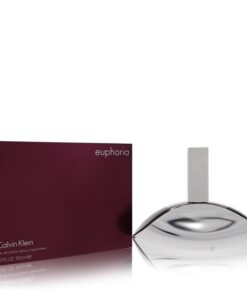
Euphoria by Calvin Klein Eau De Parfum Spray 3.3 oz (Women)
Original price was: $121.95.$82.16Current price is: $82.16. -
Crystal Noir by Versace Eau De Toilette Spray (Tester) 3 oz (Women)
Original price was: $102.95.$68.85Current price is: $68.85. -
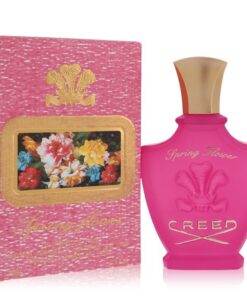
Spring Flower by Creed Eau De Parfum Spray 2.5 oz (Women)
Original price was: $312.95.$292.52Current price is: $292.52. -
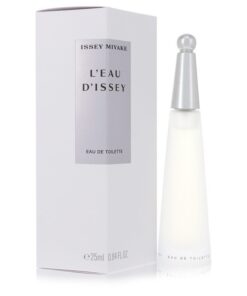
L’EAU D’ISSEY (issey Miyake) by Issey Miyake Eau De Toilette Spray .85 oz (Women)
Original price was: $60.95.$39.83Current price is: $39.83.
Keep reading