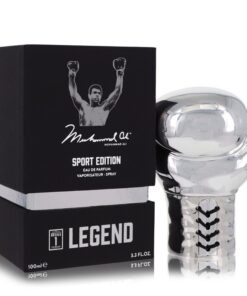
Perfume is made in two separate industries. A supply industry turns plants and feedstocks into individual aroma materials. A composition industry blends several dozen of those into a concentrate, which is diluted in denatured ethanol, chilled, filtered, filled and tested. The plant side can take six years. The bottling side takes hours.
What are the actual stages of making a perfume?
Almost every consumer-facing description of perfume production jumps from a field of flowers to a finished bottle. The interesting part is what sits between them, and it is not one process but a chain of roughly ten, run by different companies on different timescales.
| Stage | What actually happens | Typical timescale | Who does it |
|---|---|---|---|
| 1. Agricultural production | Planting, growing, harvesting a crop grown for its odor | Months to six years depending on the crop | Growers and cooperatives, often under contract to an extractor |
| 2. Extraction or isolation | Distillation, expression, solvent extraction or CO2 extraction; or chemical synthesis and fermentation for synthetics | Hours per batch, within a harvest window of days to weeks | Extractors (Robertet, Payan Bertrand and others) and chemical producers |
| 3. The brief | A written creative and commercial specification for the fragrance | Weeks | Brand marketing, with a fragrance house evaluator |
| 4. Formulation and trials | The perfumer writes and rewrites a formula; assistants weigh each trial | Months, sometimes years | Perfumer, lab technicians, evaluator |
| 5. Selection and safety clearance | Consumer testing, IFRA compliance check, stability and packaging compatibility | Weeks to months | Fragrance house regulatory and product safety teams |
| 6. Compounding the concentrate | The approved formula is weighed at scale into a batch of fragrance oil | Hours | Fragrance house compounding plant |
| 7. Alcohol dilution | Concentrate dissolved into denatured ethanol and water | Hours | Filler, often a third-party contract manufacturer |
| 8. Maceration or rest | The diluted solution is held before finishing | Hours to months; not publicly specified by houses | Filler |
| 9. Chilling and filtration | Cooling to precipitate waxes and insolubles, then filtering to a clear liquid | Hours | Filler |
| 10. Filling and quality control | Filling, crimping, capping, coding, and release testing | Hours per batch | Filler and brand QC |
The table’s timescales are conventional industry ranges drawn from the sources cited at the end, not a single company’s published schedule. No major house publishes its actual cycle times.
Where do the raw materials come from, and how long does that take?
The slowest step in the whole chain is agricultural, and the extremes are genuinely extreme.
Orris, the powdery violet-and-suede material that gives a fragrance like Prada Infusion d’Iris its cool, dry, almost floury quality, is the clearest case. A 2025 field trial of Iris pallida in Greve in Chianti reports rhizomes grown for two to four years, harvested, sun-dried for about nine days with a 70 percent loss of fresh weight, then stored for a further 36 months before extraction. Fresh rhizome is close to odorless; the violet-like irones form slowly by oxidation during that storage. The study measured orris concrete yields averaging 0.045 to 0.055 percent, and its best treatment produced 6.30 kg of concrete per hectare per year. That is the entire annual output of a hectare of land, and it arrives three years late.
Rose is the opposite problem: not slow, but narrow. Flowers are picked in a window of a few weeks, at dawn, and must be distilled the same day. A Turkish production description records stills charged with 500 kg of flowers and 1,500 liters of warm water, distilled for about an hour and a half with the condenser running at 35 to 45 °C, producing a first and second oil that are later blended. Peer-reviewed measurements of Rosa damascena put the distilled oil yield at 0.035 to 0.049 percent of fresh flower weight.
Jasmine is hand-picked, and the labor figure is the one worth remembering: published trade data put one picker’s daily output at 3 to 4 kg of flowers over five to six hours. Egyptian Jasminum grandiflorum returns about 2.6 kg of concrete per tonne of blossom, a 0.26 percent yield, and the concrete yields 55 to 61 percent absolute on ethanol washing.
| Material | What sets the lead time | Published figure |
|---|---|---|
| Orris (Iris pallida) | Rhizomes grow for years, then must be dried and stored before the odorous irones form at all | Sun-dried about 9 days with 70% loss of fresh weight, then 36 months in storage; concrete yield 0.045-0.055%; 6.30 kg concrete per hectare per year |
| Rose (Rosa damascena) | A short annual flowering window; flowers must be distilled the day they are picked | Stills charged with 500 kg flowers and 1,500 L warm water for about 1.5 hours; oil yield 0.035-0.049% of fresh flowers |
| Jasmine (Jasminum grandiflorum) | Hand picking; every flower is removed individually | 3-4 kg of flowers per picker per 5-6 hour shift; concrete yield about 0.26% of blossom; concrete gives 55-61% absolute |
| Vanilla | Hand pollination, then a curing process, then an exposed single-origin supply chain | Price moved from around $20/kg in 2008-2010 to about $600/kg in 2017-2018, a move the published analysis attributes to demand, falling supply, speculation and cyclone damage including Cyclone Enawo |
| A synthetic aroma chemical | Reactor capacity and feedstock availability | Made to specification, with no seasonal window; houses do not publish plant lead times |
What is a perfumer’s brief, and who writes it?
A brief is a written document, not a conversation. IFF describes it as defining “the target audience, emotional intent and olfactive direction,” produced with the client and shepherded by a scent design manager acting as an olfactive art director. It will normally also carry the commercial constraints that decide what the perfumer can actually use: a cost-per-kilo ceiling for the concentrate, the product categories it must be safe in, the markets it will ship to, and the packaging it has to survive.
Briefs are usually competitive. Several houses, and several perfumers within each house, work the same brief and submit against each other. The scale of that funnel is visible in Givaudan’s 2025 integrated report, which refers to “more than 300,000 briefs we receive each year” — a company-wide figure covering flavour and taste briefs as well as fragrance, not a fine-fragrance count. Most submissions are never sold.
How does a perfumer turn a brief into a formula?
A formula is a list of materials with a weight against each, and nothing else. It is written and revised on paper or in software, not improvised at the bench. Perfumers work from a palette that IFF puts at over 1,000 natural extracts and aroma molecules; the physical cabinet those materials sit in, the organ, typically holds between 1,000 and 3,000 bottles arranged by family or by volatility.
Trials are weighed by laboratory technicians, not by the perfumer. IFF says “dozens, sometimes hundreds, even thousands of versions may be created before one feels complete,” compounded by perfumery assistants and then smelled blind by the perfumer and the creative team. Each version differs from the last by a few grams in a few places.
What happens when the concentrate is compounded?
Compounding is the industrial version of the lab trial. The approved formula is scaled from a 100-gram trial to a batch measured in hundreds of kilos, weighed into a jacketed stainless steel vessel in a set order, and mixed until homogeneous. The output is a single dark liquid: the concentrate, or fragrance oil. This is the thing the brand buys. It is shipped to a filler, and in many cases the brand never sees the formula at all, because the formula is the fragrance house’s property.
Before it can be compounded, the formula has to clear regulatory review. Since IFRA’s 51st Amendment was notified on 30 June 2023, new fragrance creations containing restricted or specified materials have had to comply by 30 March 2024, and existing creations by 30 October 2025. A formula that fails is not a safety incident; it is simply not manufacturable for the market it was written for, and goes back to the perfumer.
Does maceration really change the fragrance?
This is where the honest answer diverges from the romance. IFF describes maceration as a resting period that “can take weeks to months.” The historic French house L.T. Piver describes its own process as taking place “over several weeks, sometimes several months” in stainless steel vats. Neither states a number, and no major house publishes a maceration schedule for a named fragrance.
Patent literature describing industrial batch manufacture of fragrance compositions points somewhere else entirely. One process patent describes a conventional batch cycle of about four to six hours to produce roughly 1.5 tonnes of product, with 15 to 90 minutes of residence time attributed to maceration and 27 minutes to 1.5 hours attributed to precipitating wax out of solution. In that account, the bulk of the delay is not flavor-marrying: it is waiting for solids to drop out so they can be filtered off.
Both things can be true. A long hold is plausible for a heavily loaded, resin-rich fine fragrance; a four-hour cycle is plausible for a high-volume line. What is not supportable is the claim that all perfume is aged for six months, or that ageing is analogous to wine maturation. Ethanol solutions of aroma materials do change over time, and the most reliably documented change is not improvement but oxidation.
Why is perfume chilled and filtered before bottling?
Because a concentrate contains materials that are only marginally soluble in dilute ethanol at room temperature, and much less soluble when cold. Absolutes carry plant waxes. Resinoids carry non-volatile gums. Left alone, these drop out as a haze or a floc on the first cold night in a warehouse, and the product looks defective.
The fix is to force the problem forward. The batch is cooled so the marginal material precipitates deliberately, then filtered out while cold. Patent literature on perfume and cologne manufacture describes the solution being left to stand until flakes form, with formation times of two to twelve hours depending on the fragrance, then filtered through media with porosity between 0.5 and 30 microns using bag, press, cartridge or basket filters. Houses do not publish their chilling temperatures or filter specifications. What the step does is well understood; the exact numbers are proprietary.
There is a real cost to it. Filtration removes some of what was in the formula. A perfumer who wants a heavy, waxy, resinous character has to allow for the fact that part of it will be on the filter pad, which is one reason oil-based and unfiltered releases smell different from their alcoholic counterparts.
What alcohol is perfume diluted with?
In the United States, almost always specially denatured alcohol, and usually Formula 40-B. The composition is set in federal regulation, not by the brand: 27 CFR 21.76 specifies that per 100 gallons of ethyl alcohol, Formula 40-B is denatured with one-sixteenth of an avoirdupois ounce of denatonium benzoate and one-eighth of a gallon of tert-butyl alcohol. Denatonium benzoate is an extremely bitter compound; tert-butyl alcohol is the second denaturant. The regulation lists perfumes, toilet waters and colognes among its authorized uses.
A commercial safety data sheet for 190-proof SDA 40-B gives the shipped composition as 92.3 percent ethyl alcohol, 7.6 percent water, 0.1 percent tert-butyl alcohol and under 0.1 percent denatonium benzoate. The practical consequence: the ethanol in your bottle is denatured so it cannot be drunk and is not taxed as a beverage, and the bitterness is deliberate. That is a tax and public health mechanism, not a quality signal, and it does not distinguish a cheap fragrance from an expensive one.
What happens on the filling line and in quality control?
Filling is ordinary precision liquid packaging: the filtered bulk is metered into bottles, the pump is crimped in place, the cap is fitted, a batch code is applied, and the unit is cartoned and cellophaned. Much of the world’s fine fragrance is filled by third-party contract manufacturers rather than by the brand.
Quality control runs on two axes. Analytical release checks the bulk against a reference: appearance, color, density, refractive index, alcohol content, and a gas chromatography trace compared against a retained standard. Olfactive release is a trained panel smelling the batch against a retained reference sample. IFF describes finished fragrances being tested for stability, safety and consistency across conditions including “blotters and skin, warm and cool light, day and night.” Stability testing normally means holding samples at raised temperature and in light for a defined period and checking that they have not shifted, discolored or thrown a precipitate.
The ten steps, in order
- Grow. A crop is planted and harvested on its own schedule. For orris, six years elapse between planting and extraction.
- Extract or synthesize. Odorous material is separated from biomass, or built from feedstocks. See how aroma materials are extracted.
- Brief. The brand writes a specification: audience, direction, cost ceiling, markets, categories.
- Formulate. The perfumer writes a formula in weights. Technicians weigh each trial.
- Revise. Tens to thousands of versions. Blind smelling. Consumer testing on shortlisted submissions.
- Clear. Regulatory review against IFRA Standards and destination-market law; stability and packaging compatibility testing.
- Compound. The formula is weighed at production scale into a concentrate.
- Dilute. Concentrate into denatured ethanol and water at the target strength.
- Chill and filter. Cool to precipitate waxes and insolubles; filter cold to a bright liquid.
- Fill and release. Fill, crimp, cap, code, carton. Analytical and olfactive release against a retained reference.
Which perfume production myths are wrong?
“Perfume is aged for months or years, like wine”
What is claimed: Fine fragrance requires a long maturation that improves it.
What the evidence shows: Houses describe maceration in vague ranges — “weeks to months” (IFF), “several weeks, sometimes several months” (L.T. Piver) — and publish no schedules. Patent literature describing industrial batch manufacture accounts for the hold time largely as wax precipitation before filtration, in a total cycle of four to six hours.
What people wrongly conclude: That a specific number of months is standard, and that a bottle improves on a shelf. Wine ageing involves an enzyme-free but chemically active reduced system in glass; a filtered hydroalcoholic solution in a sprayer that admits air is more likely to oxidize than to improve.
“The bottle is full of flowers”
What is claimed: Because it takes thousands of kilograms of roses to produce a kilogram of rose oil, a bottle of rose perfume contains an enormous quantity of roses.
What the evidence shows: Arithmetic, mine: a 50 ml eau de parfum at 15 percent concentrate contains about 7.5 g of concentrate. If 1 percent of that concentrate is rose oil — a generous dose for a rose accord, since most rose character in commercial perfumery comes from isolates and synthetics — the bottle holds roughly 0.075 g of rose oil. At the peer-reviewed yield of 0.045 percent, that is about 170 g of flowers. Not thousands of kilograms.
What people wrongly conclude: That raw material yield ratios tell you something about a finished bottle. They tell you about the price of the ingredient, and very little else.
“Expensive perfume uses better alcohol”
What is claimed: Premium fragrances use a purer or finer grade of alcohol.
What the evidence shows: In the US the denaturing formula is fixed by 27 CFR Part 21. SDA 40-B is SDA 40-B. Alcohol quality does vary in terms of residual congeners and odor, and some producers do buy a tighter specification, but the denaturant package is regulatory, identical across price tiers, and not something a brand chooses for quality reasons.
What people wrongly conclude: That the bitterness or the alcohol note in a fragrance reflects cheapness. It reflects federal alcohol law.
| Production parameter | Publicly known? | Best available source |
|---|---|---|
| The formula of a named fragrance | No | Trade secret. Published note lists are marketing copy |
| Concentrate percentage in a named product | Rarely | Occasional brand disclosure; not standardized across the industry |
| Maceration time for a named product | No | Qualitative ranges only: “weeks to months” (IFF), “several weeks, sometimes several months” (L.T. Piver) |
| Chilling temperature and filter specification | No | Patent literature gives ranges for the general process: 0.5-30 micron media, 2-12 hours for flake formation |
| Cost-per-kilo ceiling in the brief | No | Not disclosed by any house |
| Alcohol denaturing formula | Yes, exactly | 27 CFR 21.76 specifies SDA Formula 40-B composition |
| Regulatory compliance deadlines | Yes, exactly | IFRA amendment notification letters give dated deadlines |
| Agricultural yields | Partly | Peer-reviewed field trials and analytical studies; commercial extractors do not publish theirs |
The honest limits of this article
Nobody outside the industry can verify a specific house’s process. Fragrance houses do not publish formulas, compounding parameters, maceration schedules, chilling temperatures, filter specifications, or the cost-per-kilo ceilings in their briefs, and the contract fillers who do much of the physical work are bound by confidentiality. Everything above is assembled from three kinds of source: published agronomic and analytical research, which is reliable but narrow; patent literature, which describes what processes exist and what problems they solve but is written to claim inventions rather than to document current practice; and fragrance-house corporate communication, which is accurate as far as it goes and deliberately unspecific. Where those sources give ranges rather than figures, this article gives ranges. Where they give nothing, it says so.
What this changes about how you smell things
Two things follow from the chain above, and both are usable at a counter.
First, the filtration step explains a real difference you can smell. Compare a heavily resinous alcoholic fragrance with an oil-based or unfiltered version of a similar accord: the oil usually reads thicker and closer to the skin, because nothing was removed on a filter pad. An amber-heavy composition like Guerlain Shalimar shows what survives that process; the balsamic weight in the base is there because the formula was built expecting it to be.
Second, the agricultural section explains why some notes are always partly synthetic. If a hectare of iris produces about 6 kg of concrete a year, then a launch shipping globally cannot be built on orris concrete alone at any plausible price, and it is not. The violet-powder effect in a widely distributed fragrance is mostly ionones and methyl ionones doing the work, which is not a cheat — it is the only way the smell reaches you at all. Reading a note list as a shopping list of plants gets the production chain backwards. This is the whole substance of the naturals-versus-synthetics argument, and it is also the constraint a perfumer works inside every day.
What our own catalogue shows
One more thing the catalogue can show, carefully framed. Of our 3,832 listings, about 1,142 — a little under a third — say anything at all about materials. Within that copy, the materials named most often are bergamot and rose (about 334 listings each), musk (316), amber (283), jasmine (267), vanilla (201), lavender (200), sandalwood (185), mandarin (176) and lemon (170). Read that as the materials perfume copywriters mention most, not as the materials the industry uses most. The two lists are not the same, and the materials that matter most commercially — the woody-ambers, the hedione-type florals, the laundry musks — barely appear in marketing language at all.
It would be satisfying to end with a figure for how much of what we sell is made under licence, and we cannot produce one honestly: a listing records a name, a price, a size and a code, not who holds the licence, and licence arrangements change without the bottle changing. What the catalogue does show is the shape of the thing. We list products from more than 460 distinguishable brands, most of them carrying a handful of references each, and almost none of them operates a factory. The production chain described above sits behind nearly every bottle on the page, whoever’s name is on the front.
Bottles to try this on
If you want to taste the difference the extraction step makes rather than read about it, the most instructive pairing is a distilled-material fragrance against a solvent-extracted one. Something citrus-led and clean like Acqua di Parma Colonia sits almost entirely on expressed and distilled oils; a dense floral absolute construction like Chanel No 5 does not. And a fragrance built around a single synthetic, such as Escentric Molecules Molecule 01, shows how little of the chain above is agricultural at all.
For the aged-material end of the spectrum, Tom Ford Oud Wood and Dior Sauvage Eau de Parfum make a useful contrast: one is built on materials whose supply chains are slow and constrained, the other on materials that can be made to specification in a reactor.
Related reading
- what reformulation actually involves — regulation, cost, supply and packaging changes
Common questions
How long does it take to make a perfume from scratch?
From brief to shelf, most fine fragrance projects run months to a couple of years, dominated by formulation trials and approvals rather than manufacturing. Manufacturing itself is fast: compounding, dilution, chilling, filtration and filling are measured in hours per batch. The slow part is agricultural, and for orris it runs to six years.
What is maceration in perfume making?
Maceration is holding the diluted fragrance before finishing. IFF describes it as taking weeks to months. Patent literature on industrial batch manufacture attributes most of the hold to precipitating waxes so they can be filtered out. No major house publishes a maceration schedule for a named fragrance, so treat specific month figures with suspicion.
Why is perfume filtered?
Because absolutes and resinoids carry waxes and gums that are only marginally soluble in dilute alcohol. Cooling the batch forces them out as flakes, and filtering cold removes them, so the product will not go hazy in a cold warehouse. Patent literature describes filter media between 0.5 and 30 microns.
What kind of alcohol is in perfume?
In the US, usually specially denatured alcohol Formula 40-B. Under 27 CFR 21.76 it is ethanol denatured with denatonium benzoate, an intensely bitter compound, plus tert-butyl alcohol. A commercial 190-proof grade ships at about 92.3 percent ethanol and 7.6 percent water. The denaturing is a tax and safety requirement, not a quality tier.
Do perfume brands make their own perfume?
Rarely. Most brands write a brief, a fragrance house composes and supplies the concentrate, and a contract filler dilutes, filters, fills and packs it. A handful of houses keep in-house perfumers. The formula usually belongs to the fragrance house, not the brand whose name is on the bottle.
How many ingredients are in a perfume?
Commercial fine fragrance formulas commonly run from a few dozen to a few hundred materials, drawn from a palette IFF puts at over 1,000. The physical cabinet a perfumer works from typically holds 1,000 to 3,000 bottles. Exact counts for named fragrances are not published; the formula is a trade secret.
What is a fragrance concentrate?
The concentrate, also called the fragrance oil or the juice, is the blended aroma material before any alcohol is added. It is what the fragrance house sells to the brand. An eau de parfum is typically that concentrate at 15 to 20 percent in denatured ethanol and water, though the exact figure is not standardized.
Is perfume tested on the production line?
Yes, on two axes. Analytical release checks appearance, color, density, refractive index, alcohol content and a gas chromatography trace against a retained reference. Olfactive release is a trained panel smelling the batch against a retained standard. Stability testing holds samples hot and in light to confirm they do not shift or precipitate.
Why does the same perfume smell slightly different between batches?
Because naturals vary. The measured essential oil content of the same rose cultivar differed across harvest years in published field trials, and the same is true of most crops. Houses correct for this by blending lots against a reference standard, but tolerances are not zero. Oxidation in your own bottle is a larger effect than batch variation.
Does an expensive perfume cost more to make?
Sometimes, but the concentrate is rarely the dominant cost. Packaging, glass, advertising, retail margin and licensing typically exceed the cost of the juice. High-cost naturals like orris and sandalwood do move the number materially, which is why they usually appear at low dose alongside synthetics that carry the same effect.