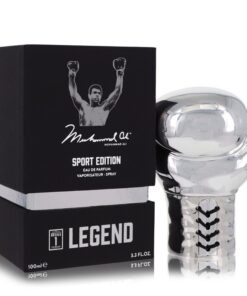
One US fluid ounce is 29.5735 ml. That is why a 50 ml bottle is labeled 1.7 fl oz and a 100 ml bottle 3.4 fl oz: the metric figure is the real fill and the ounce figure is a rounded conversion. Compare bottles on price per millilitre, and size the bottle to how fast you will finish it.
Everything else in this article follows from those two ideas. The conversion explains the strange numbers on the box. Price per millilitre is the only comparison that survives contact with different bottle sizes, different concentrations and different discounts.
What is the exact conversion from ounces to ml?
One US fluid ounce equals 29.5735295625 millilitres, exactly. The figure is exact rather than measured because both units are defined: the US gallon is defined as 231 cubic inches, the inch is defined as exactly 2.54 centimetres, and a fluid ounce is one one-hundred-and-twenty-eighth of a gallon. NIST’s own conversion tables give the working value as 2.957353 × 101 millilitres.
Two cautions. The first is that the imperial fluid ounce used in the United Kingdom is a different unit, about 28.41 ml. British and American ounce figures for the same bottle will not match. The second is that this is a volume conversion, not a weight conversion; fragrance is sold by volume, and the two are not interchangeable because ethanol is lighter than water.
Why are perfume bottles sold at 30, 50 and 100 ml?
Because the industry settled on those numbers and nothing forces it to change. There is no law prescribing them.
In the European Union, mandatory pack sizes were abolished by Directive 2007/45/EC, which repealed the earlier directives that had set prescribed ranges and retained mandatory nominal quantities only for wine and spirit drinks. Cosmetics are free. In the United States, cosmetic regulation under 21 CFR Part 701 governs what the label must say, not how much liquid the bottle may hold. Nobody is required to sell 50 ml rather than 47.
What remains is convention, reinforced by tooling costs, by retail shelf design, and by the fact that consumers now read 30, 50 and 100 as the normal steps. A brand that launched at 45 ml would be read as short-changing its customers, whatever the price per millilitre said.
Why does the bottle say 1.7 oz and 3.4 oz?
Because US law requires both units, and the ounce figure is a conversion of the metric fill rather than a fill in its own right.
The Fair Packaging and Labeling Act, at 15 U.S.C. § 1453(a)(2), requires the net quantity of contents to be stated on the principal display panel “using the most appropriate units of both the customary inch/pound system of measure … and … the SI metric system.” That dual-declaration requirement took effect on 14 February 1994. NIST Handbook 130, the model regulation most states adopt, carries the same rule: from that date, “appropriate units of both systems shall be presented in a declaration of quantity,” subject to narrow exemptions.
FDA’s cosmetic rules then constrain the format. Under 21 CFR 701.13, liquid measure must be expressed in terms of the US gallon of 231 cubic inches and its quart, pint and fluid-ounce subdivisions; a declaration of less than one ounce “shall be expressed in common or decimal fractions of the respective ounce”; and decimals “shall not be carried out to more than two places.”
So a European-made 50 ml bottle has a metric fill of 50 ml, which converts to 1.6907 fl oz, which is printed as 1.7. The arithmetic below is mine and is straightforward division, but it is worth seeing laid out, because it settles most of the confusion about these labels.
| Metric fill | Exact US fluid ounces (arithmetic: ml ÷ 29.5735295625) | Typically printed as | Notes |
|---|---|---|---|
| 5 ml | 0.1691 | 0.17 fl oz | Miniature and sample-vial size. In the EU, containers under 5 ml are exempt from the nominal-content declaration entirely |
| 7.5 ml | 0.2536 | 0.25 fl oz | Common for extrait and for dab-stopper bottles |
| 10 ml | 0.3381 | 0.33 or 0.34 fl oz | Both printed figures refer to the same 10 ml. Standard purse-atomiser size |
| 15 ml | 0.5072 | 0.5 fl oz | Rounds cleanly, which is why it reads as a half-ounce |
| 20 ml | 0.6763 | 0.67 or 0.7 fl oz | Often a travel-set or rollerball size |
| 30 ml | 1.0144 | 1 or 1.0 fl oz | 30 ml is slightly more than one fluid ounce, not less |
| 50 ml | 1.6907 | 1.7 fl oz | The most common mid-size in fine fragrance |
| 75 ml | 2.5361 | 2.5 fl oz | Frequent in older and in Italian-house lines |
| 100 ml | 3.3814 | 3.3 or 3.4 fl oz | Both printed figures refer to the same 100 ml. 3.4 rounds up, 3.3 rounds down |
| 125 ml | 4.2268 | 4.2 fl oz | Less common, mostly older masculine lines |
| 150 ml | 5.0721 | 5 or 5.1 fl oz | Large-format, often eau de cologne |
| 200 ml | 6.7628 | 6.7 or 6.8 fl oz | Large-format, usually EDT or cologne |
| 250 ml | 8.4535 | 8.4 or 8.5 fl oz | Splash bottles and body-mist formats |
The reverse direction is where people trip. A label reading 3.4 fl oz does not mean 100.55 ml, even though 3.4 × 29.5735 = 100.55 by arithmetic. It means 100 ml, rounded up for the ounce declaration. The metric number is the specification; the ounce number is derived from it.
| Printed ounce figure | Literal ml if taken at face value (arithmetic: fl oz × 29.5735295625) | Actual fill almost always |
|---|---|---|
| 0.17 fl oz | 5.03 ml | 5 ml |
| 0.25 fl oz | 7.39 ml | 7.5 ml |
| 0.34 fl oz | 10.06 ml | 10 ml |
| 1 fl oz | 29.57 ml | 30 ml |
| 1.7 fl oz | 50.28 ml | 50 ml |
| 2.5 fl oz | 73.93 ml | 75 ml |
| 3.4 fl oz | 100.55 ml | 100 ml |
| 6.8 fl oz | 201.10 ml | 200 ml |
Before any of the conversions, one fact about how sizes are actually labelled. Of the 3,832 bottles we list, about 3,809 — some 96% — state their size only in fluid ounces. Every millilitre figure in this article, and on most of our own listings, is a conversion of an ounce label rather than a measured volume: 3.4 oz becomes 100 ml because that is the nominal bottle, not because anyone put a graduated cylinder to it.
The sizes themselves cluster hard. About 1,885 listings are 100 ml (3.4 oz), 379 are 50 ml (1.7 oz), 334 are 125 ml (4.2 oz), 210 are 75 ml (2.5 oz), 173 are 30 ml (1 oz), 160 are 90 ml (3 oz) and 149 are 200 ml (6.8 oz), with 38 distinct sizes in all and a long thin tail down to 5 ml. Roughly 98 listings give no size we can read at all. So the size ladder is not a ladder: it is one dominant rung, a few real alternatives, and a scattering of oddities.
Why is price per millilitre the only honest comparison?
Because a sticker price compares two things at once — how much liquid you get and how much each unit of it costs — and hides both.
Price per millilitre is simple division: price divided by millilitres. It is the one number that lets you compare a 30 ml at one price against a 100 ml at another, a discounted EDT against a full-price EDP, and a boxed unit against a tester of the same fragrance. Nothing else does that.
No US federal law requires a seller to show it. NIST’s guide to US retail pricing laws states that unit pricing is mandatory in ten jurisdictions — Connecticut, Maryland, Massachusetts, New Hampshire, New Jersey, New York, Oregon, Rhode Island, Vermont and the District of Columbia — with voluntary provisions in nine more and no provisions at all in thirty-three states. Coverage also varies by product category. In practice, for fragrance, the arithmetic is yours to do.
The figures in the table below are illustrative arithmetic, not prices from this or any catalogue. They exist to show the shape of the problem.
| Illustrative size and price | Price per ml (arithmetic) | Price per fl oz (arithmetic) | What it shows |
|---|---|---|---|
| 30 ml at $60 | $2.00 | $59.15 | The small bottle is usually the worst value per millilitre |
| 50 ml at $85 | $1.70 | $50.28 | The middle size normally sits between the other two |
| 100 ml at $120 | $1.20 | $35.49 | The standard case for buying large |
| 200 ml at $190 | $0.95 | $28.09 | Large formats can be dramatically cheaper per millilitre |
| 50 ml at $62 versus 100 ml at $140 | $1.24 versus $1.40 | $36.67 versus $41.40 | The counterexample. When one size is discounted and the other is not, the big bottle can be the worse buy |
Two conversions worth memorising. To turn a price per ounce into a price per millilitre, divide by 29.5735. To turn a price per millilitre into a price per ounce, multiply by 29.5735.
The per-millilitre penalty for buying small is steep and consistent. Across the roughly 3,820 of our listings with a readable size, the median works out to about $1.84 per ml at 30 ml (1 oz), $1.39 at 50 ml (1.7 oz), $0.60 at 100 ml (3.4 oz) and $0.30 at 200 ml (6.8 oz). A 30 ml costs roughly three times as much per millilitre as a 100 ml of the same liquid. And the exception is rare: among the 385 fragrances we stock in more than one size, the largest bottle fails to be the cheapest per millilitre in only about 5.5% of cases. Buying big is almost always cheaper per spray, which is an argument for buying big only if you are going to finish it.
What are travel sizes, miniatures and atomisers?
Four different things get called travel sizes, and they are not equivalent.
| Format | Typical volume | What it is | What to watch |
|---|---|---|---|
| Manufacturer travel spray | 10–20 ml | A factory-filled spray of the same liquid, often sold in a refillable metal case | Usually the highest price per millilitre in the range |
| Miniature | 4–7.5 ml | A small factory-filled bottle, historically a gift-set or counter item | Some vintage miniatures are dab-only with no atomiser |
| Sample vial | 1–2 ml | A factory-filled vial, usually a promotional item rather than a stocked product | Very short usable life once opened, because of the large air-to-liquid ratio |
| Refillable atomiser | 5–10 ml | An empty container you fill yourself from a bottle you own | Decanting introduces air and handling. Fill, cap and use it within weeks rather than months |
Two points matter for anyone flying. The TSA liquids rule limits carry-on containers to 3.4 ounces (100 ml) or less per item, all fitting in one quart-sized bag per passenger. A 100 ml bottle is therefore exactly at the carry-on ceiling, and a 125 ml or 200 ml bottle is not permitted in the cabin at all. And in the European Union, containers of less than five millilitres are exempt from the nominal-content declaration under Article 19(1)(b) of Regulation 1223/2009, which is why very small vials often carry no volume marking.
One distinction is worth holding on to here: a travel size is not a decant. A travel size is a small bottle the manufacturer filled, sealed and sold as a small bottle, with the brand’s own atomiser on it. A decant is liquid somebody else transferred into a third-party sprayer, which means the volume, the pump and the chain of custody are all outside the brand’s control. The listing title is where the format is stated, so read it rather than inferring it from the price. The same logic applies to tester units, which are full-size bottles in plain cartons rather than a different product.
How do you choose a bottle size?
- Estimate how long a bottle lasts you, not how long it lasts in theory. Count your sprays per wearing and how many days a week you wear that fragrance. A bottle you finish in eight months and a bottle you finish in eight years are different purchases. The spray-count arithmetic turns that into a number of months.
- Buy small on a fragrance you have not worn for a full day. The 30 ml costs more per millilitre, and that premium is cheaper than a 100 ml you stop reaching for. A proper wear test comes first.
- Buy large only on a fragrance you have finished a bottle of before. Repeat purchase is the only evidence that survives.
- Compute price per millilitre for every option before deciding. Divide price by millilitres. Do it for the 30, the 50 and the 100, including any discount, and write the three numbers down.
- Check whether the discount is on the size you actually want. A promotion on one size regularly inverts the usual ordering, which is the single most common way buyers overpay.
- Cross-check the concentration you are comparing. A 100 ml EDT and a 50 ml EDP are different products, not two sizes of one product, and price per millilitre does not make them comparable. See what the concentration labels mean.
- Prefer 100 ml or smaller if the bottle will travel with you. That is the TSA carry-on ceiling and it is not negotiable at the checkpoint.
- Factor in how long you will take to use it. A very large bottle of something you wear occasionally spends years partly full and partly air, which is the condition that ages a fragrance fastest. Where the bottle lives matters more the longer you keep it.
Which perfume size myths are wrong?
Myth: one ounce is thirty millilitres
The claim: 1 fl oz = 30 ml.
What the evidence shows: one US fluid ounce is 29.5735295625 ml. A 30 ml bottle holds 1.0144 fl oz — slightly more than an ounce, not less.
What people wrongly conclude: that a bottle labeled “1 fl oz” and a bottle labeled “30 ml” are different sizes. They are the same bottle described two ways.
Myth: 3.3 oz and 3.4 oz are different bottles
The claim: a 3.3 oz bottle is smaller than a 3.4 oz bottle.
What the evidence shows: 100 ml is 3.3814 fl oz. Brands round it either way, and FDA’s format rule permits decimals to two places. Both labels describe 100 ml.
What people wrongly conclude: that a listing showing 3.3 oz is a smaller or counterfeit version. Check the metric figure, which is the specification.
Myth: the ounce figure is the real fill
The claim: the bottle contains exactly the printed number of ounces.
What the evidence shows: for fragrance made to a metric fill, the metric number is the specification and the ounce number is its rounded conversion, printed because 15 U.S.C. § 1453(a)(2) requires both systems.
What people wrongly conclude: that 3.4 fl oz means 100.55 ml and that a bottle measuring 100 ml is underfilled.
Myth: the biggest bottle is always the best value
The claim: price per millilitre always falls as size rises.
What the evidence shows: it usually does, at list price. Discounting breaks it routinely, and a promoted 50 ml can undercut a full-price 100 ml per millilitre.
What people wrongly conclude: that the arithmetic can be skipped. It cannot; it takes ten seconds.
Myth: travel sprays are a weaker version
The claim: smaller formats are diluted.
What the evidence shows: a manufacturer travel spray of a given fragrance at a given concentration is the same liquid as the full-size bottle. What differs is the container and, almost always, the price per millilitre.
What people wrongly conclude: that weaker performance from a travel spray indicates a different formula, when the usual cause is a smaller or differently engineered atomiser.
Myth: shelf labels are required to show price per ml
The claim: unit pricing is the law.
What the evidence shows: there is no federal unit-pricing requirement in the United States. Ten jurisdictions mandate it, nine treat it as voluntary, and thirty-three states have no provision at all — with coverage varying by product category even where it applies.
What people wrongly conclude: that a displayed unit price is guaranteed present, standardised and comparable between retailers.
The honest limits of this article
The conversion arithmetic here is exact and checkable, and you should check it. What is not exact is the fill in any individual bottle. Filling lines work to tolerances, and the European framework for prepacked goods sets those tolerances explicitly: under the average-quantity system, the mean contents of a batch must not fall below the nominal quantity, only a small proportion of packages may fall below the nominal quantity minus the tolerable negative error, and none marked with the estimated sign may fall below twice that error. For nominal quantities between 100 and 200 ml, the tolerable negative error is 4.5 percent. A 100 ml bottle is therefore a bottle nominally holding 100 ml, not a guarantee of exactly 100.000 ml. Rounding conventions also differ between brands and between regions, so the same fill can appear as 3.3 or 3.4 fl oz on different packages. We have not measured any bottle, and the illustrative price arithmetic above uses invented figures chosen to make the comparison legible, not prices from this catalogue.
Practical shortcuts
For everyday use, three rounded facts cover almost everything: 30 ml is about one ounce, 50 ml is about 1.7 ounces, and 100 ml is about 3.4 ounces and is the largest bottle you can carry onto a US flight. For anything involving money, use the full 29.5735 and divide.
What our own catalogue shows
Put that the other way round. For the 385 fragrances we stock in more than one size, the smallest bottle costs a median of about 95% more per millilitre than the largest — roughly double. We are quoting the median deliberately, and only the median: individual pairs run from a small discount on the little bottle to absurd multiples, because 5 ml miniatures sit in the same pool as 200 ml flacons and wreck any average built from them. The median is the figure that describes a typical pair of bottles on a shelf.
Bottles to try this on
Size laddering is easiest to see on a fragrance stocked across a full range: Versace Eros next to the 1 oz (30 ml) Versace Eros is the arithmetic in two bottles. the 200 ml Paco Rabanne 1 Million makes the same point at the other end of the scale, and a large-format eau de cologne such as Acqua di Parma Colonia at 180 ml is where the per-millilitre advantage of the big bottle is largest of all. For a carry-on-legal option, the 1.6 oz (50 ml) YSL Libre sits comfortably inside the TSA limit.
Common questions
How many ml is 1 oz of perfume?
One US fluid ounce is 29.5735295625 ml. Bottles sold as 1 fl oz are usually filled to 30 ml, which is 1.0144 fl oz, so the round 30 is slightly more than a true ounce. The UK imperial fluid ounce is a different unit at roughly 28.41 ml and will not match American figures.
Is 3.4 oz the same as 100 ml?
Yes. 100 ml converts to 3.3814 US fluid ounces, and brands print that as either 3.3 or 3.4. Both labels describe the same 100 ml fill. FDA’s format rule allows decimal fractions to two places, so the rounding direction is a brand choice rather than a difference in what is in the bottle.
Why do perfume bottles show two different measurements?
US law requires it. The Fair Packaging and Labeling Act, at 15 U.S.C. 1453(a)(2), requires net quantity to be declared on the principal display panel in both customary inch-pound units and SI metric units, a rule that took effect on 14 February 1994. NIST Handbook 130, adopted by most states, carries the same requirement.
What size perfume can I take on a plane?
In carry-on baggage, the TSA limits containers to 3.4 ounces (100 ml) or less, all fitting inside one quart-sized bag per passenger. A 100 ml bottle is exactly at the limit. A 125 ml or 200 ml bottle cannot go in the cabin regardless of how much liquid is left inside it.
Is the 100 ml bottle always cheaper per ml than the 50 ml?
At list price, usually yes. Discounting breaks the pattern often enough to check every time. Divide price by millilitres for each size, including any promotion, and compare the three numbers. A promoted 50 ml can undercut a full-price 100 ml on price per millilitre by a clear margin.
How do I calculate price per ml?
Divide the price by the number of millilitres. A 100 ml bottle at $120 is $1.20 per ml, using arithmetic on illustrative figures. To convert a price per ounce into a price per millilitre, divide by 29.5735. To go the other way, multiply by 29.5735. No US federal law requires a seller to display this for you.
Why are perfumes sold in 30, 50 and 100 ml?
Convention, not regulation. The EU abolished mandatory pack sizes with Directive 2007/45/EC, keeping them only for wine and spirits, and US cosmetic rules in 21 CFR Part 701 govern labelling rather than fill volumes. The sizes persist because of tooling, shelf design and consumer expectation.
Should I buy a big bottle of a perfume I have never worn?
No. Buy the smallest format available until you have worn it through a full day and a second wearing. The per-millilitre premium on a 30 ml is small compared with the cost of a 100 ml bottle you stop reaching for. Repeat purchase is the only reliable signal that a large bottle is right.
Does a bigger bottle mean the perfume goes off before I finish it?
It raises the risk, because a bottle you use slowly spends years partly full, and the headspace of air above the liquid is where oxidation happens. Size the bottle to your actual rate of use rather than to the best price per millilitre, particularly for a fragrance you wear only occasionally.
Do perfume bottles contain exactly the stated volume?
They contain the nominal volume within permitted tolerances. Under the European average-quantity system, batch mean contents must not fall below the nominal quantity, and for nominal quantities between 100 and 200 ml the tolerable negative error is 4.5 percent. A 100 ml bottle is a bottle nominally holding 100 ml, not a guarantee of exactly 100.000 ml.