Your cart is currently empty!
How to Make Perfume Last Longer on Your Skin
How to Make Perfume Last Longer on Your Skin
If a fragrance vanishes on you in two hours, the usual assumption is that the bottle is weak or fake. Occasionally that is true. Far more often the problem is one of four things: your skin is dry, you are spraying in the wrong places, you bought a concentration that was never designed to last, or your bottle has been sitting in a hot bathroom for a year.
All four are fixable. Here is what actually works, in rough order of impact.
Why fragrance fades: the one mechanism that explains everything
Fragrance disappears because aromatic molecules evaporate. That is the whole process. Everything that extends longevity does it by slowing evaporation or by giving the molecules something to hold onto.
Small, light molecules — citrus, mint, most green notes — evaporate in minutes no matter what you do. Large, heavy molecules — woods, resins, musks, ambers, vanillas — hang around for hours or days. This is why a fresh citrus fragrance will never last as long as a heavy amber one, regardless of technique or price.
Keep that in mind, because it sets a ceiling. No amount of technique turns a light cologne into an eight-hour fragrance. Technique closes the gap between what you are getting and what the bottle is capable of.
Skin type is the biggest variable, and you already know yours
Dry skin is the most common reason fragrance underperforms. Dry skin offers very little for fragrance oils to bind to, so they sit on the surface and evaporate faster.
Oilier skin holds fragrance noticeably longer. It also tends to amplify sweet and ambery notes, which is why the same bottle can read as rich on one person and thin on another.
If your fragrance dies in ninety minutes and other people report six hours from the same bottle, dry skin is the first thing to suspect. Two practical signs: your hands crack in winter, and lotion absorbs almost instantly.
The fix: moisturise first
This is the single most effective change most people can make, and it is free if you already own lotion.
- Apply an unscented lotion or body oil to the areas you are about to spray. Scented lotion will interfere.
- Let it absorb for a minute. Spraying onto wet lotion dilutes the fragrance.
- Then spray. The moisturised surface gives the oils something to sit in rather than on.
Petroleum jelly in a thin layer works even better and is the old backstage trick, though it is unpleasant under clothing. A light unscented body oil is the better everyday compromise.
Apply to warm, clean skin
Straight out of a shower is the ideal window: skin is warm, hydrated and pores are open. Pat dry rather than rubbing, moisturise, then spray. This sequence takes no extra time and reliably adds an hour or two.
Where to spray, and where not to
Pulse points work because they are warm, and warmth pushes fragrance outward. But they are not all equal, and the most commonly recommended one is the worst.
The good spots
- Upper chest and sternum. Warm, covered by clothing, and body heat carries the scent upward toward your own nose and outward at conversational height. The best single location.
- Base of the neck and behind the ears. Effective, but easy to overdo. One spray maximum here.
- Inner elbows. Warm, protected, and they get less friction than wrists.
- Back of the neck, under the hairline. Excellent for leaving a trail as you move.
The overrated spots
- Wrists. The classic recommendation and one of the worst. Wrists are constantly exposed to air, rubbed against sleeves, and washed several times a day. Fragrance there has the shortest life of anywhere on your body.
- Behind the knees and ankles. The theory is that scent rises. In practice these spots are cool, covered and contribute almost nothing.
- Directly onto hair. Alcohol is drying to hair. Spray a brush and run it through instead, or mist the air and walk through it.
Distance and technique
Hold the bottle 4 to 6 inches from skin. Closer concentrates the alcohol in one wet spot; further wastes most of the spray into the air.
And do not rub your wrists together. The usual explanation, that friction “breaks the molecules,” is not how chemistry works. The real reason is simpler: rubbing generates heat and physically spreads the fragrance thin, which accelerates evaporation of the top notes. Let it dry on its own.
Fabric outlasts skin, by a wide margin
Fragrance on wool, cotton or a scarf can remain detectable for days. Skin gets hours. This is the most underused lever available.
The trade-off is that fabric does not develop a fragrance the way skin does. Skin warmth drives the progression from top notes through the base. On fabric you get a flatter, more static version, weighted toward whatever is heaviest in the formula.
The best approach uses both: two sprays on moisturised skin for the development, one spray on a collar, scarf or jacket lining for the duration.
- Test on an inconspicuous area first. Fragrance can stain silk and some light-coloured fabrics.
- Avoid leather and delicate knitwear.
- Scarves are ideal: dense, close to the face, and easy to wash.
Concentration: buy the right version in the first place
If longevity is your priority, this decision outweighs every technique above. Higher fragrance-oil concentration means more material on your skin and a longer wear time.
| Concentration | Typical fragrance oil | Typical wear on skin | Notes |
|---|---|---|---|
| Eau Fraîche | around 1–3% | 1–2 hours | Body-mist territory |
| Eau de Cologne (EDC) | around 2–5% | 2–3 hours | Designed as a refresher |
| Eau de Toilette (EDT) | around 5–15% | 3–5 hours | The standard for fresh fragrances |
| Eau de Parfum (EDP) | around 15–20% | 6–8 hours | Best all-round balance |
| Parfum / Extrait | around 20–30% | 8–12 hours or more | Sits close to the skin, projects less widely |
One counterintuitive point: parfum and extrait often project less than an EDP, because they contain proportionally more heavy base material and less alcohol to carry it outward. They last longer while smelling quieter. If you want a room to notice, an EDP is frequently the better buy.
Full detail in EDT vs EDP vs parfum. Where the supplier states it, the concentration is named on the product page — check it before choosing between two versions of the same fragrance in the shop.
Storage: the slow, invisible problem
A fragrance that used to last six hours and now lasts two has probably degraded. Three things cause it:
- Heat. Accelerates chemical breakdown. A car glovebox or a windowsill will damage a bottle within a season.
- Light. UV degrades aromatic compounds, particularly citrus. Clear bottles are the most vulnerable.
- Temperature swings and humidity. Bathrooms are the worst place in the house to store fragrance, which is where most people store it.
Keep bottles in a drawer, a closet or their original box, somewhere cool and stable. Leave the cap on. Do not decant into unsealed containers for long-term storage, and avoid unnecessary decanting in general since it introduces oxygen.
Stored properly, most fragrances hold up for three to five years, and heavier ambery and woody compositions often far longer. Stored on a sunny shelf, a year can be enough to ruin one.
A workable routine
- Shower. Pat dry rather than rubbing.
- Unscented moisturiser on chest, neck and inner elbows. Wait a minute.
- Two sprays at 4 to 6 inches: one on the sternum, one at the base of the neck.
- One spray on a collar, scarf or jacket lining.
- Do not rub. Do not add more because you stopped smelling it — you habituated, everyone else has not.
- Bottle back in the drawer.
If you have done all of this and a fragrance still disappears, the fragrance is the problem rather than your method. Heavier ambery, woody and gourmand compositions are the ones to look at — see best winter fragrances for men, or browse fragrance for women and fragrance for men.
Frequently asked questions
Why can’t I smell my own perfume after an hour?
Olfactory habituation. Your brain filters out constant, non-threatening smells within roughly 15 to 60 minutes, while other people continue to detect them normally. This is the most common reason people overspray. Ask someone rather than adding more.
Does Vaseline really make perfume last longer?
Yes, and it works well. A thin layer of petroleum jelly gives the fragrance oils an occlusive base to bind to and slows evaporation. It is greasy under clothes, so an unscented body oil or lotion is the more practical everyday option with most of the same benefit.
Should I spray perfume on my clothes or my skin?
Both. Skin lets the fragrance develop properly through its top, heart and base stages. Fabric holds it far longer but presents a flatter version. Two sprays on skin plus one on a scarf or collar gives you the development and the duration.
Is it bad to rub your wrists together after applying?
It shortens the opening. Rubbing does not “break molecules” — that claim is folklore — but the friction generates heat and spreads the liquid thin, both of which speed up evaporation of the lightest notes. Let it air dry.
How long does perfume last in the bottle?
Typically three to five years unopened and stored well, often longer for heavy woody, ambery and gourmand compositions. Citrus-forward fragrances degrade fastest. Heat, sunlight and bathroom humidity are what shorten that dramatically, so a drawer or closet is the right place for a bottle.
Shop the story
-
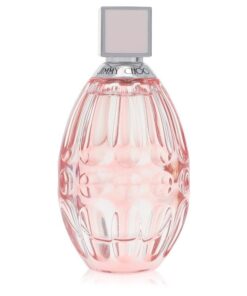
Jimmy Choo L’eau by Jimmy Choo Eau De Toilette Spray (Tester) 3 oz (Women)
Original price was: $112.95.$54.76Current price is: $54.76. -
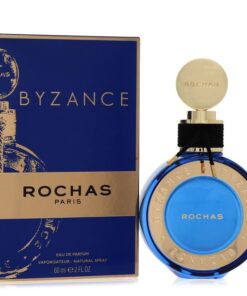
Byzance 2019 Edition by Rochas Eau De Parfum Spray 2 oz (Women)
$60.68 -
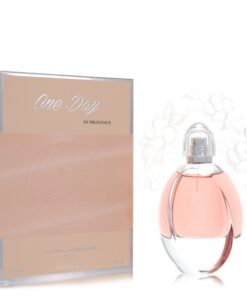
One Day in Provence by Reyane Tradition Eau De Parfum Spray 3.3 oz (Women)
$42.04 -
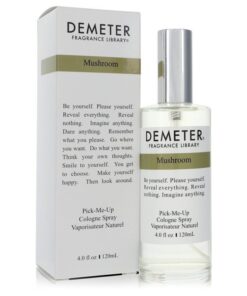
Demeter Mushroom by Demeter Cologne Spray (Unisex) 4 oz (Men)
$43.10