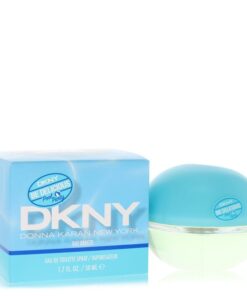
A “blue” fragrance is a marine-fresh aromatic built on a small shared palette: citrus, dihydromyrcenol for a shivering lavender-like freshness, Calone for the oceanic-melon effect, and increasingly ambroxan for a skin-like base. The bottle is usually blue because the accord is; the color is marketing built on a real olfactory family.
This is also the honest answer to the most common complaint we hear: yes, a lot of masculine fragrances smell alike right now, and there are documented reasons why rather than a conspiracy.
What does “blue” actually mean?
It is a customer word rather than a perfumery one. No supplier or house classifies fragrances as blue. What customers mean by it is remarkably consistent, though: clean, fresh, aquatic or marine, faintly salty or ozonic, not sweet, and safe for an office or a hot day.
Perfumery would call most of these fresh aromatic fougères or marine-aromatics. The blue label is useful anyway, because it names a real cluster that customers recognize and the industry’s own vocabulary obscures.
The bottle color follows the accord rather than causing it. Blue packaging on a fresh aquatic is a legibility decision — the same reason gourmands come in pink and gold — and it works because customers have learned the code. It also means the code can be used dishonestly: a blue bottle on a sweet amber fragrance is a marketing choice, not a description.
Which materials make a fragrance smell blue?
| Material | What it contributes | Documented origin |
|---|---|---|
| Dihydromyrcenol | A “diffusive lavender-like freshness”; clean, slightly soapy, metallic-fresh, with a lime edge | Webb, 1956; its use was boosted by a 1966 patent that allowed production as an olfactively pure material |
| Calone 1951 | Oceanic, melon, watermelon-rind, faintly oyster-like; the marine effect itself | Beereboom, 1966, at Pfizer; arose serendipitously from benzodiazepine research |
| Hedione | “Luminous, transparent and blooming”; adds air and radiance without weight | Demole, 1960 |
| Iso E Super | “A complex and rich impression of cedar and vetiver”; a dry, neutral woody spine | Hall, 1973; made in two steps from myrcene |
| Ambroxan | Dry, mineral, faintly salty; a skin-like base that extends the whole thing | Ambrox, Stoll, 1951 |
| Citrus, especially bergamot and grapefruit | The bright top; volatile and gone within the hour | Expressed from peel; see below |
| Clean musks | Soft, laundered, skin-adjacent softness under everything | Modern polycyclic and macrocyclic musks, after nitro-musks were phased out |
All of the origin attributions in that table come from a single peer-reviewed history of industrial fragrance chemistry, which is a stronger source than this subject usually gets.
What did Calone actually do?
Calone is the material most often blamed for the 1990s, and its history is a good story with a primary document behind it.
Pfizer patented it. US Patent 3,517,031, filed 15 August 1966 and granted 23 June 1970, lists John J. Beereboom, Donald P. Cameron and Charles R. Stephens as inventors and Pfizer as assignee. It covers 1,5-benzoxepin- and -benzodioxepin-3-ones “as flavor and odorant agents,” and names 7-methyl-3,4-dihydro-2H-1,5-benzodioxepin-3-one — Calone itself — as a preferred embodiment.
What the patent says about the smell is worth quoting, because it is not what you would expect. The compounds impart “a fresh, leafy or green taste to foods and a pleasant, leafy odor to perfumes” with characteristics “reminiscent of melons,” and produce “a fresh, leafy, watermelon taste and a fruity odor when added to foods.” On the perfumery side: “a distinct leafy or fresh effect is obtained,” and “the improvement in odor or bouquet is most evident when the watermelon ketones are used in violet leaf perfumes.”
So the material that became the sea was patented as a green, leafy, melon note for violet leaf perfumes. The “ocean” reading is something the industry found later. Pfizer’s chemists were not trying to bottle the Mediterranean.
The peer-reviewed review gives one dosage figure from a real fragrance: Calvin Klein Escape, from 1991, contained “0.8%w/w of Calone 1951.” That is a documented percentage in a named fragrance, which is rare enough to be worth noting.
Where did the blue accord come from?
A sequence of fragrances over about a decade, each solving part of the problem.
| Fragrance | Year | What it contributed |
|---|---|---|
| Dior Eau Sauvage | 1966 | The transparent citrus masculine. Perfumer & Flavorist reports it was “powered by a 3% dose” of Hedione — an early and unusually heavy use, though that source describes it as an early application rather than the first |
| Davidoff Cool Water | 1988 | The template. Trade press covering Coty’s 2025 documentary about the fragrance calls it “a manifesto for the olfactive movement known as ‘New Freshness’” and writes that “with its minimalist composition and bold ingredient overdoses, it broke conventions and became a cultural phenomenon — sparking waitlists at fragrance counters and record-breaking sales across Germany, the UK, and the US.” Those are the reporter’s words about a Coty release, not Coty’s own. Composed by Pierre Bourdon |
| Calvin Klein Escape | 1991 | The documented Calone overdose at 0.8% w/w |
| Issey Miyake L’Eau d’Issey | 1992 | The aquatic floral, credited to Jacques Cavallier; lotus, melon and freesia over a woody white musk base |
| Giorgio Armani Acqua di Giò | 1996 | The marine-aromatic as a mass-market default. Composed by Alberto Morillas |
| Chanel Bleu de Chanel | 2010 | The modern dry version: grapefruit and mint over cedar and incense, sweetness kept out. Jacques Polge |
| Dior Sauvage | 2015 | The ambroxan era. Dior’s own page describes citrus “powerfully anchored by the ambery nobleness of ambroxan, resinous elemi and woods” |
Coty released a ten-minute documentary about Bourdon, The Gentleman Perfumer, in April 2025, which tells you how much weight the industry still puts on a 1988 fragrance. Bourdon’s own summary of the method is worth keeping: “With very few notes, you can create a form, you create an atmosphere, you create a need, it becomes addictive, you want to hear it again. That is a real perfume.” If you want to hear the whole arc in three bottles, Davidoff Cool Water, Acqua di Gio and Dior Sauvage Eau de Toilette span 27 years and are recognizably the same conversation.
So why do so many masculines smell alike?
Five reasons, and none of them is that perfumers have run out of ideas.
The palette is shared and it works. Every house buys from the same handful of suppliers, and those suppliers sell the same materials to everyone. Dihydromyrcenol, Calone, Hedione, Iso E Super and ambroxan are available to Chanel and to a fifteen-dollar Dubai brand alike. See the supplier industry behind the label.
The brief is the same. A brand commissioning a masculine in 2026 asks for something fresh, clean, long-lasting, broadly likeable, safe in an office and appealing to men aged 18 to 35. Give ten perfumers that brief and the same materials and you get ten related answers. The convergence happens upstream of the perfumer.
The successes get benchmarked. A brief frequently names a reference: make us something in this space. When LVMH began describing Sauvage in its own results as “the world’s leading fragrance” — an owner’s claim rather than audited market data, but one no competitor has publicly disputed — it became the reference, and the market converged on it. How that works commercially is set out in how the four fragrance categories are really defined.
Ambroxan solved an old problem. Fresh materials do not last. Ambroxan let brands sell a fresh opening with an eight-hour base, which resolved the single biggest weakness of the category — and so everybody used it. See ambroxan and the clean-skin accord.
Regulation narrowed the alternatives, somewhat. Materials that would have given a masculine a rougher, mossier, more animalic character — oakmoss at historical levels, crude birch tar, nitro-musks, certain animal materials — are restricted or gone. That does not force everything toward blue, but it removes some of the roads away from it. See why perfumes get reformulated.
How do I find a fresh fragrance that is not generic?
The category is bigger than the cluster suggests, and there are reliable ways out of it.
- Look for a fresh fragrance with a weird second act. The generic ones are the ones where the base is pure ambroxan-and-musk. Something with vetiver, moss, mint, tea, salt, herbs or a bitter citrus in the heart will hold your interest longer.
- Try citrus colognes rather than aquatics. A real cologne structure — neroli, petitgrain, bitter orange, lavender — is fresh without being marine, and smells nothing like the blue cluster. It also will not last, and that is the trade.
- Try vetiver. Dry, rooty, smoky-green, and completely outside the Calone-ambroxan axis while still reading as clean and formal.
- Try the older end. Eau Sauvage from 1966 and the classical fougères are fresh masculines from before the blue accord existed, and they are still in production and generally cheap.
- Judge at four hours, not four minutes. Almost every fragrance in this family smells good in the first sixty seconds. The differences are entirely in what happens afterward. See how to run a testing session without wrecking your nose.
Fragrances worth smelling to hear the range within “fresh”: Chanel Bleu de Chanel Eau de Parfum — which we do not carry, but which is worth smelling wherever you can — for the dry, incense-finished version, Versace Dylan Blue Eau de Toilette for the patchouli-anchored one, Issey Miyake L’Eau d’Issey Pour Homme for the aquatic-floral, and Dior’s Eau Sauvage for what fresh meant before Calone.
What is the difference between aquatic, marine, ozonic and fresh?
These words get used interchangeably in product copy and they are not the same thing. Separating them is genuinely useful when you are reading a note list.
- Fresh is the broadest and least informative. It can mean citrus, green, aromatic, aquatic, clean-musky or any combination. On its own it tells you almost nothing.
- Aquatic means water, in the abstract: cool, wet, slightly sweet, often with melon or cucumber facets. Calone is the classic driver.
- Marine means the sea specifically: salt, iodine, mineral, sometimes with a faint fishy or oyster edge at higher doses. Closer to a harbor than a swimming pool.
- Ozonic means air after rain or the smell of clean laundry in wind — a high, slightly metallic, almost electrical brightness. Built from aldehydic and specific ozonic materials rather than from Calone.
- Aromatic means the herb garden: lavender, rosemary, sage, mint, basil. This is the fougere side of fresh, and it is the oldest part of the family.
Most blue fragrances are a blend of aquatic, aromatic and citrus, with a woody-ambery base. The ones that stand out usually push one of these harder than the others: a genuinely salty marine, a genuinely herbal aromatic, or a genuinely ozonic brightness. What the note pyramid actually describes covers how much weight to put on a note list at all.
Why do fresh fragrances feel weaker than they used to?
Two things are going on, and only one of them is about the fragrance.
The materials really are volatile. Citrus, aromatic herbs and aquatic materials sit at the top of the volatility range. They leave the skin fast, by their nature. A citrus cologne that lasts two hours is not defective; it is a citrus cologne. This is why the ambroxan-and-musk base became universal — it gave the category a floor.
Your nose adapts to them faster than to anything else. Clean, skin-adjacent materials are exactly the kind your olfactory system stops registering, because they are close to the background. Within twenty minutes you frequently cannot smell your own fresh fragrance while everyone near you still can. People then over-apply, which is the actual cause of most complaints about fresh fragrances being either too weak or too strong.
The practical fix is unglamorous: apply the normal amount, then ask somebody. How to measure performance honestly explains why “I can’t smell it” and “nobody can smell it” are completely different diagnoses, and what skin actually does to a fragrance covers the variation between individuals.
Is the blue era ending?
Slowly, and in a specific direction.
The clearest signal is that the sweet masculine has been eating the fresh masculine’s market share for over a decade. The current growth in men’s fragrance is in gourmand and gourmand-adjacent territory — vanilla, tonka, caramelized fruit, amber — rather than in aquatics, and the house that opened that door did so in 2008: see Rabanne, from Calandre to Phantom. How ethyl maltol built the gourmand covers that shift with the trade data behind it.
The second signal is within the fresh category itself. The interesting recent work tends to push one facet hard rather than blending everything: intensely salty and mineral compositions, tea and green compositions, bitter citrus, and fresh fragrances built on vetiver rather than on ambroxan. The generic middle is crowded and the edges are where the work is happening.
What has not changed is the commercial logic. Fresh still sells to the largest number of people with the fewest objections, and a brand that needs a safe global pillar will keep briefing one. The blue accord is not going anywhere; it has just stopped being the only answer.
Myths worth correcting
“Calone was invented to smell like the sea.” Pfizer’s patent describes a fresh, leafy, melon odor and recommends it for violet leaf perfumes. The marine reading came later, from the industry rather than the chemists.
“Blue fragrances are all the same fragrance.” They share a palette and a brief. Bleu de Chanel, Acqua di Giò, Sauvage and Cool Water are genuinely different compositions with different structures and different bases, and the differences are audible at hour four.
“The bottle color tells you the smell.” It usually correlates, because brands use color as shorthand. It is a marketing convention with no regulatory or technical meaning, and it can be used against you.
“Modern masculines all smell alike because perfumers are lazy.” The convergence happens in the brief and in the shared supplier palette, upstream of the perfumer. The same perfumers produce highly individual work when the brief allows it.
“Cool Water was a copy of Green Irish Tweed.” The relationship between those two fragrances is one of the oldest arguments in the hobby and we are not going to settle it here. What is documented is that Coty, in its own 2025 documentary, presents Cool Water as a 1988 Pierre Bourdon composition. The “New Freshness” and “bold ingredient overdoses” framing is the trade press’s narration of that release rather than a Coty statement.
The honest limits of this article
The material origins are the strongest part: dihydromyrcenol (Webb, 1956, boosted by a 1966 patent), Calone 1951 (Beereboom, 1966, from Pfizer benzodiazepine research), Hedione (Demole, 1960), Iso E Super (Hall, 1973, from myrcene in two steps) and Ambrox (Stoll, 1951) all come from one peer-reviewed review of industrial fragrance chemistry, as does the 0.8% w/w Calone figure for Calvin Klein Escape 1991. The Pfizer patent details and all the odor quotations come from the patent document itself.
Perfumer credits: Pierre Bourdon for Cool Water is corroborated by Coty, the brand owner, which made a documentary about him, via trade reporting on that 2025 release. The “New Freshness” and “bold ingredient overdoses” phrasing around Cool Water, however, is the reporting’s own narration and not a Coty statement; an earlier version of this article attributed it to Coty, and that has been corrected. Jacques Cavallier for L’Eau d’Issey (1992), Alberto Morillas for Acqua di Giò (1996) and Jacques Polge for Bleu de Chanel (2010) all rest on published encyclopedia biographies rather than brand statements. Dior does not name a perfumer for Sauvage on its own pages, so none is given in the table here.
One soft claim has now been replaced rather than flagged. The article previously said Eau Sauvage was “generally described as the first commercial use of Hedione”. Perfumer & Flavorist’s fiftieth-anniversary piece on the material describes Eau Sauvage as “powered by a 3% dose of the new ingredient” and treats it as an early application rather than definitively the first, so the article now says that instead. The same source also complicates the date: it records that Firmenich researcher Edouard Demole identified methyl jasmonate in 1957 and that the first 50 kg batch of Hedione was produced in 1961, where the peer-reviewed review gives simply “(Demole, 1960)”. We print both rather than choose. And the sequence in the historical table is a narrative we have constructed from individually sourced facts — the fragrances are real and dated, but the claim that each one “contributed” a specific thing to a lineage is interpretation.
The five-reason explanation of market convergence is an analytical argument, not a sourced finding. It is consistent with how the supplier and brief system works, as set out with sources in batch one’s article on who makes your perfume, but nobody has published a study proving it.
We have deliberately not adjudicated the Cool Water and Green Irish Tweed question. It cannot be settled without formulas, which do not exist publicly, and both fragrances have been reformulated repeatedly since the 1980s. Anyone who tells you they have resolved it from smelling current bottles is comparing two things that are not the originals.
All olfactory descriptions here are our own except where quoted. No formula is public.
What our own catalogue shows
Two counts we were asked for and will not publish. We cannot tell you how many of our listings name marine, aquatic, sea, ozonic or Calone notes, because listings have no note field: only about 61 of our roughly 3,950 publish a full top-heart-base pyramid and about 71% never use the word “note” at all, so the count would measure which copywriters like the word “aquatic”. And we are not counting the products with “blue” or “bleu” in the name, because the name is the marketing, which is the thing this article is trying to see past. A bottle called Blue is making a claim about a mood, and a great many fragrances in this accord are not called Blue at all.
What the data does show is the vocabulary. Across the 1,142 listings whose copy discusses materials, the ten most mentioned are bergamot, rose, musk, amber, jasmine, vanilla, lavender, sandalwood, mandarin and lemon. Bergamot is first and three of the ten are citrus. Calone, dihydromyrcenol, Hedione and Iso E Super — the materials this article says actually build the blue accord — appear nowhere near that list, because they are not words a box uses. The gap between what the copy names and what the formula contains is the whole reason fresh fragrances are so hard to tell apart on paper.
Related reading
- What ambroxan actually smells like — the molecule behind almost every clean-skin base
- How a brand commissions a fragrance — the supplier industry the label never mentions
- The natural versus synthetic argument — what each actually does, and why it is not a quality question
- Our Chanel house guide — the aldehydic signature, the Mul harvest, and a century of reformulation
- How the Versace licence works — a licensed house done well, and how to navigate the Eros families
- Our Dior house guide — four perfumer eras, and how to read the Sauvage range
Common questions
What is a blue fragrance?
A customer term rather than a perfumery one, describing a consistent cluster: clean, fresh, aquatic or marine, faintly salty, not sweet, and safe for an office or hot weather. Perfumery would call most of them fresh aromatic fougeres or marine-aromatics. The blue bottle follows the accord as a legibility convention.
Which molecule makes fragrance smell like the sea?
Calone 1951, chemically 7-methyl-3,4-dihydro-2H-1,5-benzodioxepin-3-one. It was patented by Pfizer – US 3,517,031, filed 15 August 1966, inventors John J. Beereboom, Donald P. Cameron and Charles R. Stephens – and the patent describes it as fresh, leafy and reminiscent of melons rather than marine. The ocean reading came from the industry later.
What is dihydromyrcenol?
A synthetic material that a peer-reviewed history of fragrance chemistry describes as displaying a diffusive lavender-like freshness. It is attributed to Webb in 1956, with its use boosted by a 1966 patent that allowed production as an olfactively pure material. Clean, slightly soapy and metallic-fresh, it is one of the defining materials of the modern fresh masculine.
Why do so many men’s fragrances smell the same?
Because the palette, the brief and the benchmarks are shared. Every house buys from the same handful of suppliers; the brief for a masculine is almost always fresh, clean, long-lasting and broadly likeable; and successful fragrances become the reference other briefs name. The convergence happens upstream of the perfumer.
Is Davidoff Cool Water the original blue fragrance?
It is the template. Trade press covering Coty’s own 2025 documentary about the fragrance describes Cool Water as a manifesto for the olfactive movement known as New Freshness, with a minimalist composition and bold ingredient overdoses that broke conventions and became a cultural phenomenon. That wording is the reporter’s characterisation rather than a Coty statement. It launched in 1988 and was composed by Pierre Bourdon.
Does the blue bottle mean anything?
Only as a marketing convention, and it usually correlates. Brands use color as shorthand the same way gourmands come in pink and gold. There is no technical or regulatory meaning, so a blue bottle on a sweet amber fragrance is entirely possible – and that is worth remembering when buying online without a sample.
How do I find a fresh fragrance that is not generic?
Look for one with a distinctive second act rather than a pure ambroxan-and-musk base: vetiver, moss, mint, tea, salt, herbs or a bitter citrus in the heart. Classical citrus colognes and vetiver fragrances sit entirely outside the blue cluster. And judge everything at four hours, because they all smell good in the first minute.
Was Cool Water copied from Creed Green Irish Tweed?
That argument cannot be settled, and we are not going to pretend otherwise. No formula for either fragrance is public and both have been reformulated repeatedly since the 1980s, so comparing current bottles compares two things that are not the originals. What is documented is that Coty presents Cool Water as a 1988 Pierre Bourdon composition; the “bold overdoses” characterisation comes from trade press covering that release, not from Coty.