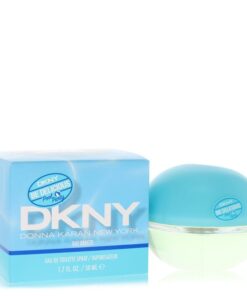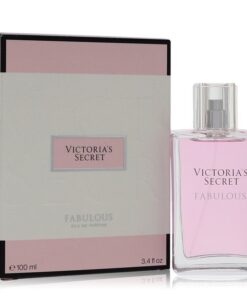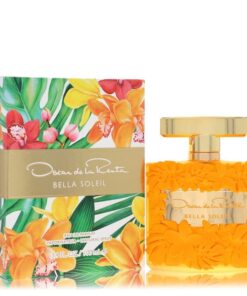
The safest fragrance gift is a bottle of something the person already wears, which means photographing their bottle first. Failing that, buy small rather than large, stay in a register you know they like, avoid anything smoky or divisive, and choose a sealed unit rather than a tester.
Fragrance is one of the most-given and most-returned gifts there is, and the reason is structural: you are buying something that has to work on someone else’s skin, in someone else’s taste, without being able to test either. This article is about lowering the odds of getting it wrong. It is not about finding the perfect bottle, because that is not a problem a stranger can solve.
The decision that matters most
Before anything else, decide which of these two things you are doing.
Replacing something they already use. This is by far the highest success rate available to you, and it is also the least exciting. If someone has worn the same fragrance for three years, a fresh bottle of it is a good gift and a safe one. The only way to get this wrong is to buy the wrong version — and that is a real risk, covered below.
Introducing them to something new. Much riskier, much more interesting if it lands, and it demands that you buy small. A 100 ml bottle of a fragrance someone does not like is a mistake that sits on a shelf for a decade. A 30 ml bottle of the same mistake is a much smaller one.
Almost everything that goes wrong with fragrance gifting comes from doing the second thing at the size appropriate to the first.
What actually goes wrong
Three failure modes, in descending order of how often we see them.
- Wrong register. The recipient wears cool, clean, citrus things and receives a dense vanilla-amber, or the reverse. This is not a matter of quality; the two are simply different kinds of object. Fragrance registers are not interchangeable and liking one tells you very little about the others.
- Wrong version of the right fragrance. The most avoidable failure and the most common near-miss. A range name is not a product name. Where a house sells Intense, Elixir, Noir, Absolu, Pour Homme and Pour Femme variants of one name, those are separate compositions. Across our catalogue, 260 products carry at least one of those qualifier words in the name, with Intense alone appearing in 106 listings.
- Duplicate. They already own it, or they own something from the same register that does the same job. Nothing to do but ask someone who knows.
How to find out what they wear without asking
Photograph the bottle, and photograph the whole of it. Four pieces of information, all of which you need:
- The brand. Obvious, and occasionally genuinely hard — some bottles carry the fragrance name in large type and the house name nowhere prominent.
- The complete fragrance name, including every qualifier. “Sauvage” and “Sauvage Elixir” are different fragrances. So are “9 PM” and “9 PM Pour Femme”. So are “Club de Nuit Intense Man” and “Club de Nuit Untold”.
- The concentration word. Eau de toilette, eau de parfum, parfum, extrait. Within one brand’s range this usually reflects a real difference in the composition, and someone who wears the eau de toilette may actively dislike the eau de parfum of the same name.
- The size. So that you can buy the same again, or larger, deliberately.
What a listing does and does not tell you explains how those four pieces map onto a product page, and why a listing that omits any of them is a question rather than a detail.
Four strategies, ranked by how likely they are to work
| Strategy | Risk | When to use it |
|---|---|---|
| Replace the exact bottle they already wear | Very low, provided you match brand, full name and concentration | Whenever you can find out. This is the default |
| Buy small in a register you know they like | Moderate | You know they wear fresh citrus things, or sweet things, and you want to broaden rather than replace |
| Buy a small or travel size as an explicit trial | Low, because the stakes are low | You want to give a fragrance gift without betting on a specific bottle |
| Buy a gift set or a set of miniatures | Low on disappointment, lower on delight | You genuinely do not know their taste and would rather be useful than memorable |
A fifth option is worth a mention for the genuinely unguessable recipient: a single-note scent, which is a cheap, low-stakes, faintly eccentric gift rather than a bet on somebody’s taste. The single-note house explained explains what those are and what they are good for.
Notice that three of the four main strategies involve buying small. That is the single most useful thing in this article.
What size, and what should you spend?
Small sizes cost more per millilitre and that is the correct trade for a gift you are not certain about. In our own catalogue, the median price per millilitre by bottle size runs $1.84 at 30 ml, $1.39 at 50 ml, $0.60 at 100 ml and $0.30 at 200 ml, across 3,819 priced listings. Where we stock the same fragrance in several sizes — 385 fragrances — the smallest costs a median of about 95 percent more per millilitre than the largest.
Read that as pricing information, not as advice to buy big. A 30 ml bottle of something the recipient loves is a better gift than a 100 ml bottle of something they tolerate, and the per-millilitre penalty is what you pay for reducing the risk.
On availability: about 382 products in our catalogue are 30 ml or smaller, which is 9.7 percent of the range, and 200 are under 20 ml or explicitly marked as mini or travel, which is 5.1 percent. So the small-size option exists but it is not universal — only 85 of the 347 distinct fragrances we stock in 30 ml or smaller are also stocked in 100 ml, so the little bottle is often a product in its own right rather than a trial version of a bigger one. Our guide to bottle sizes has the conversions and the reasons the sizes are what they are.
For a sense of the general price level: the median 100 ml eau de parfum in our catalogue is $61.93 across 1,083 such listings. That is a median across more than 450 brands and every price tier, so it is a reference point rather than a budget.
Condition matters more for a gift than for yourself
This is the one place where gift buying genuinely differs from buying for yourself, and it is worth being concrete.
| Condition | Share of our listings | For a gift |
|---|---|---|
| Sealed retail | 92.9% | What you want. Full retail carton, intact wrap, presentable |
| Tester | 5.6% | A genuine saving — a median of 14.7 percent below the sealed unit across 85 same-fragrance, same-size pairs — but a plain carton. Fine for yourself, usually wrong as a gift |
| Unboxed | 1.4% | No carton at all. Avoid for gifting, and note that in our data it is not even cheaper |
The unboxed finding is worth repeating because it runs against intuition: across the 22 cases where we stock the same fragrance in the same size both unboxed and sealed, the unboxed listing was the more expensive of the two by a median of about 16 percent. That is a small and skewed sample, so treat it as a caution rather than a rule. But it means “unboxed” is not a way to save money on a gift, and it is certainly not a way to present one.
When a tester is the smart buy and what no box actually changes explain exactly what each condition means and what you give up.
Which registers travel well as gifts?
Our characterisation, from years of handling both the bottles and the returns conversation.
| Register | As a gift |
|---|---|
| Fresh citrus and aquatic | The safest. Broadly likeable, rarely offensive, works in heat and in offices. Also the least memorable |
| Clean musk and skin scent | Very safe, quiet, and appreciated by people who find most perfume too loud |
| Sweet gourmand | Moderately safe and very polarising at the top end. Somebody who dislikes sweetness will dislike all of it |
| Woody-amber | Safe and slightly anonymous, which is exactly why it sells so well. Hard to hate |
| Aromatic fougère | Safe if the recipient already wears anything conventional. The classic default masculine |
| Oud, incense and smoke | Risky. Wonderful if they like it and unwearable to them if they do not. Do not guess at this one |
| Leather | Risky for the same reason, and often read as more unusual than the giver expected |
| Chypre and bitter-earthy | Risky. The most interesting register on the shelf and the least likely to be a safe gift |
The pattern is obvious once written down: the registers that are safest to give are the ones with the least personality, and the ones most worth giving are the ones most likely to go wrong. If you want to give something from the bottom half of that table, buy it small and say out loud that it is an experiment.
What not to do
Do not buy the biggest bottle because it looks generous. Size is the wrong axis for generosity in fragrance. A well-chosen 50 ml beats a badly chosen 200 ml by a very large margin.
Do not shop from the note list. Only about 1.5 percent of our listings publish a full top, heart and base breakdown, and a note list is marketing copy rather than a formula in any case. Two fragrances with nearly identical note lists can smell completely different. Our guide to fragrance notes explains what a note list is describing.
Do not assume a stronger concentration is a better gift. No definition of eau de parfum or eau de toilette exists in US or EU cosmetics law or in industry standards. Someone who wears the eau de toilette of a fragrance may find the eau de parfum of the same name too heavy. What EDP and EDT actually mean sets out the evidence.
Do not buy a fragrance because you like it on yourself. The same fragrance behaves differently on different people, for reasons that are well documented and have nothing to do with quality. Our guide to skin chemistry covers the mechanisms.
Do not rely on being able to send it back. Return conditions for fragrance vary between retailers and depend on whether a unit has been opened. Read the retailer’s own published returns policy before you order a gift — we are not going to characterise anyone’s policy here, including our own.
Do not buy something described as a hard-to-find bargain from an unfamiliar seller. A price far below the general level for a well-known fragrance is a reason to slow down. Our guide to fake perfume sets out what to check.
A short checklist
- Photograph their current bottle if you possibly can: brand, full name including qualifiers, concentration, size.
- If replacing, match all four. If introducing, pick a register you have evidence they like.
- Buy small unless you are replacing something you know they use.
- Choose a sealed retail unit, not a tester and not an unboxed unit.
- Check the full listing title before ordering, including the concentration word and any Pour Homme or Pour Femme suffix.
- Read the retailer’s published returns policy first, not afterwards.
If you want to go further and help them build something rather than just giving them one bottle, what a rotation is actually for is the framework we would use.
The honest limits of this article
The risk rankings and the register-by-register gift table are our editorial judgement from selling fragrance, not measurements. Nobody publishes research on which fragrance registers make successful gifts, and the answer would vary by market and by year if they did. Read those tables as informed opinion.
Every figure is an observation about our own catalogue at the time of writing, with the number of listings behind it stated: the per-millilitre medians rest on 3,819 priced listings; the roughly 95 percent smallest-versus-largest premium is a median across 385 multi-size fragrances and individual pairs vary enormously; the $61.93 median 100 ml eau de parfum is across 1,083 listings and spans every price tier and more than 450 brands; the condition shares are 3,676 sealed, 223 tester and 57 unboxed; the tester discount is a median across 85 matched pairs; and the unboxed finding rests on only 22 pairs and is presented as a caution rather than a rule. Stock moves and so will all of these.
One methodological point worth knowing: condition is not a separate field in fragrance retail data, ours included. It is carried in words inside the listing title, and a unit described as neither a tester nor unboxed is treated as sealed retail — an inference from the absence of a word rather than a recorded fact. That is why the advice above is to read the title rather than to trust a filter.
No fragrance is recommended by name anywhere in this article, deliberately. No claim is made about how long any bottle will last, how it will smell on any particular person, or what any retailer’s return conditions are. And no claim is made about shipping, packaging, gift wrapping or delivery timing, because those are policy matters and this is not a policy document.
What our own catalogue shows
One of the two counts this section was meant to carry does not exist, and the other exists only in half.
We cannot tell you how many of our listings are gift sets or multi-piece sets, or what one costs in the middle. There is no set or bundle field: a coffret is a product with a title like any other, and counting them would mean deciding which title words mean “set”, which is a judgement rather than a measurement. Given that the advice above is to buy one small bottle rather than a box of several, the gap costs the reader less than it might.
The scale-up count we have in part, and it is above: most of the fragrances we stock in a small size are not also stocked at 100 ml, so a gift that can be scaled up later is the exception rather than the rule. Whether those same fragrances are also stocked at 50 ml is not something our data answers, because the overlap we computed runs between the small sizes and 100 ml only. What can be said is that the middle size is much rarer than the big one: 377 listings offer a 50 ml against 1,880 at 100 ml. That is a reason to check the specific fragrance rather than to assume a ladder of sizes exists behind it.
Related reading
- Our listing-reading guide — what a product page reliably carries, counted across our own stock
- How to build a rotation — a small set where every bottle does a job the others cannot
- Ounces to millilitres, and what a size costs — the per-drop arithmetic, and why the little bottle is dearer
- What a tester bottle actually is — where the stock comes from, and the discount our own matched pairs show
Common questions
What is the safest perfume to buy as a gift?
A fresh bottle of whatever the person already wears. Photograph their current bottle and match four things: the brand, the complete fragrance name including every qualifier word, the concentration, and the size. If you cannot find that out, the next safest options are a small size in a register you have evidence they like, or an explicit trial-size gift. The safest registers are fresh citrus and quiet musk.
How do I find out what fragrance someone wears?
Photograph the bottle, and get all of it in frame. You need the brand, which is occasionally not prominent on the bottle at all; the complete fragrance name including qualifiers like Intense, Elixir, Noir, Pour Homme or Pour Femme; the concentration word; and the size. Those qualifiers are not decoration — they identify separate compositions, and buying the wrong variant is the most common near-miss we see.
Should I buy a big bottle or a small one as a gift?
Small, unless you are replacing something you know they already use. A 30 ml bottle of something they love is a better gift than a 100 ml bottle of something they tolerate. Small sizes do cost more per millilitre — in our catalogue the median runs $1.84 at 30 ml against $0.60 at 100 ml — and that premium is what you pay for reducing the risk of getting it wrong.
Is a tester bottle acceptable as a gift?
Usually not, even though it is a genuine saving. Across the 85 cases where we stock the same fragrance in the same size as both a tester and a sealed unit, the tester’s median price is 14.7 percent below the sealed one. The liquid is the same fragrance; what differs is the carton, which is typically plain. For yourself that is a good trade. For a gift the presentation is part of the thing.
Should I buy an unboxed bottle as a gift?
No, on two counts. There is no retail carton, so there is nothing to present. And in our own data unboxed is not even cheaper: across the 22 cases where we stock the same fragrance in the same size both unboxed and sealed, the unboxed listing was the more expensive of the two by a median of about 16 percent. That is a small, skewed sample, but it is certainly not a discount signal.
How much should I spend on a fragrance gift?
There is no right number, but a reference point helps: the median 100 ml eau de parfum in our catalogue is $61.93 across 1,083 such listings, spanning more than 450 brands and every price tier. Treat that as the middle of a very wide range rather than as a target. What matters far more than the amount is matching the register and, if you are introducing something new, buying it small.
Which fragrances should I avoid giving?
Anything smoky, medicinal or bitter, unless you have evidence the person likes it. Oud and incense, leather, and bitter-earthy chypre structures are the most rewarding registers to own and the most likely to be unwearable to someone who did not choose them. Fresh citrus, clean musk and woody-amber are the safe options, precisely because they have the least personality.
Can I return a perfume gift if they do not like it?
That depends entirely on the retailer and usually on whether the unit has been opened, so read the published returns policy before you order rather than afterwards. We are not going to characterise anyone’s policy here. The practical implication is the same either way: buy small when you are uncertain, because a small bottle you cannot return is a much smaller problem.