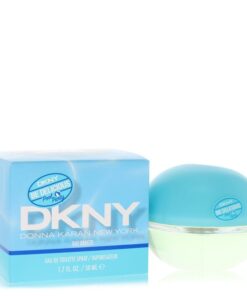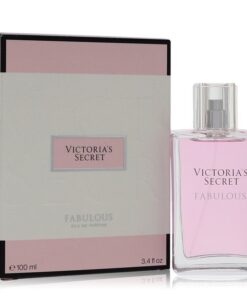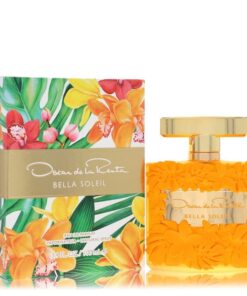
A fragrance rotation is a small set of bottles chosen so each one does a job the others cannot. Three is enough to start: one fresh, one warm, one that is only yours. Buy by register rather than by brand, buy small first, and stop when you stop reaching for something.
Most people arrive at a rotation by accident, which is why most rotations contain three bottles that smell nearly the same and nothing for a cold evening. This is a method for doing it deliberately, built on our own catalogue’s price data and on the mechanics we have already published elsewhere. It costs less than buying at random, and it produces a shelf you actually use.
What is a rotation, and why bother?
A rotation is a small deliberate set. The argument for having one rather than a single signature fragrance is practical rather than aesthetic:
- One fragrance cannot cover the range of situations you are in. A dense amber that is right in January is oppressive in August. A cool citrus that works at the office disappears at a dinner.
- You stop noticing what you wear constantly. This is well documented and it is not about the fragrance losing strength. We have set out the evidence in why the same perfume smells different on different people. Rotating restores your own perception of something you have not worn for a week.
- Bottles are not indefinitely stable. Owning fifteen bottles guarantees that most of them age faster than you can use them. How long a bottle actually lasts and how to store a bottle properly cover what actually happens to an open bottle.
The argument against a large collection is the same argument in reverse. Past a certain point you are not building a wardrobe, you are storing inventory.
How many bottles do you actually need?
Three, five or seven, depending on how much your life varies. Here is what each tier buys you.
| Size | What it covers | Who it suits |
|---|---|---|
| Three bottles | One fresh and light, one warm and dense, one that is simply the one you like most | Almost everybody. This is the honest minimum and for many people the honest maximum |
| Five bottles | The three above, plus a formal or evening option and a weekend or casual one | Anyone whose week contains genuinely different settings |
| Seven bottles | Adds a summer specialist, a winter specialist, and one bottle bought purely because it is interesting | People who enjoy fragrance as a subject rather than as grooming |
Beyond seven, the honest test is arithmetic. A 100 ml bottle contains a great many wearings — our own guide to that math is the spray arithmetic — and if you own ten bottles you are getting through each one slowly enough that ageing becomes a real factor. That is not a rule, it is a consequence.
Buy by register, not by brand
This is the single most useful discipline, and it is the one almost nobody applies. The commonest rotation failure is not owning too few bottles; it is owning four bottles from the same register because you liked the first one.
Map your candidates against these instead of against brand names:
| Register | Reads as | Best for | Where to read more |
|---|---|---|---|
| Fresh citrus and aquatic | Cool, clean, slightly metallic, not sweet | Heat, offices, daytime, anything where you need to be inoffensive | The blue accord explained |
| Aromatic fougère | Lavender and herbs over sweet hay; groomed and dry | The all-purpose masculine slot; cooler weather daytime | What a fougère actually is |
| Woody-amber | Dry, even, warm, long-lasting, low personality | Work, long days, anything needing eight hours | The material behind the modern woody |
| Sweet gourmand | Vanilla, caramel, praline, dried fruit | Cold weather, evenings, close contact | The gourmand family explained |
| Oud and resin | Smoky, medicinal, dark, dense | Formal evenings, winter, and only if you actually like it | Our oud guide |
| Chypre and earthy | Bitter-bright citrus over damp earth and patchouli | The interesting slot; the least crowded register on most shelves | The chypre family explained |
| Leather | Smoky, dry, animalic or suede-soft depending on the build | Autumn, evening, and as the odd one out in a rotation | How a leather accord is built |
| Musk and skin scent | Clean, soft, close to the body, barely there | Sleep, sickness, offices with a scent policy, and layering | Musk after the nitro-musks |
One addition worth knowing about: if what you want is a modifier rather than a whole fragrance, a single-note scent does a job no finished composition can, because it brings no agenda of its own. Our Demeter guide covers the one house in our catalogue built entirely on that idea.
Pick three different rows before you pick any brands. Then find candidates in those rows. This is backwards from how almost everyone shops and it is the reason the method works.
What size should each bottle in a rotation be?
Bigger, once you are sure — and the price data is unambiguous about how much that decision is worth. Across our catalogue, the median price per millilitre by bottle size runs like this:
| Size | Median price per ml in our catalogue |
|---|---|
| 30 ml | $1.84 |
| 50 ml | $1.39 |
| 100 ml | $0.60 |
| 200 ml | $0.30 |
Those are medians across 3,819 priced listings, and they describe our own stock at the time of writing rather than any market. Where we carry the same fragrance in more than one size — 385 fragrances — the smallest bottle costs a median of about 95 percent more per millilitre than the largest. In 5.5 percent of those cases the largest size is not the cheapest per millilitre, so the rule is strong but not absolute and it is worth a ten-second check.
The practical sequence, therefore:
- Buy small to decide. Pay the per-millilitre penalty deliberately, once, on a bottle you are testing. About 382 products in our catalogue are 30 ml or smaller, which is 9.7 percent of the range, and 200 are under 20 ml or explicitly marked mini or travel.
- Buy large only for the bottles you have already worn through. The per-millilitre saving is real and so is the risk of owning 200 ml of something you tire of in a month.
- Check that the size you want exists. Only 85 of the 347 distinct fragrances we stock in 30 ml or smaller are also stocked in 100 ml, so the small bottle is often not a trial size of something bigger.
The per-millilitre logic has the conversions and the reasons the sizes are what they are.
Can you build a rotation more cheaply?
Yes, in two ways that work and one that does not.
Testers work. Across the 85 cases where we stock the same fragrance in the same size as both a tester and a sealed retail unit, the tester’s median price is 14.7 percent below the sealed one. That is a real, repeatable discount on the same liquid in a plainer box. Where tester stock comes from explains exactly what you give up, which is mostly presentation and a labelling cross-check.
Concentration choices work. Across our catalogue the median price per millilitre is $0.88 for eau de parfum against $0.59 for eau de toilette. But the honest comparison is like-for-like: where we stock the same fragrance in both concentrations, across 73 such fragrances, the median eau de parfum costs about 1.13 times the eau de toilette per millilitre. So the catalogue-wide gap mostly reflects which brands favour which label rather than a consistent premium. An eau de toilette is not a worse buy, and for a hot-weather slot it is frequently the better one. The concentration bands explained sets out why the words mean less than people think.
Unboxed does not work as a saving. This surprised us too. Across the 22 cases where we stock the same fragrance in the same size both unboxed and sealed, the unboxed listing was the more expensive of the two, by a median of about 16 percent. Twenty-two pairs is a small sample and those unboxed units skew toward niche lines and small bottles, so treat it as a caution rather than a law. But the word “unboxed” on a listing is not by itself a discount signal. What an unboxed listing really means has the full picture.
Three worked starting points
We are deliberately not naming specific bottles, because the right one depends on what you can smell and what you like, and a list of four recommendations is how everyone ends up owning the same four fragrances. Build it by register instead.
The three-bottle start. One fresh citrus or aquatic for heat and offices. One woody-amber for long days and cold weather. One thing you simply liked more than anything else you tried, from any register at all. If the third one duplicates one of the first two, replace the duplicate rather than the favourite.
The five-bottle version. Add a sweet gourmand for evenings and cold weather, and a quiet musk or skin scent for the days when you do not want to be noticed. Those two cover the extremes that a general-purpose rotation misses.
The seven-bottle version. Add a leather or an oud for formal evenings, and one bottle from the chypre or earthy register purely because it is the least crowded shelf in modern perfumery and it will teach you something. This is the point at which the rotation stops being grooming and starts being a hobby, which is fine as long as you know that is what happened.
How to test candidates without wasting money
Four rules, all of which we have argued for at length elsewhere.
- One fragrance at a time, on skin, for a full day. Not four on a card in a shop. How to test before you buy sets out the method.
- Ignore the first ten minutes. The opening is the least representative part of almost every fragrance and the part that sells the most bottles.
- Ask someone else. Your own perception of something on your own skin is the least reliable gauge available, for reasons set out in what sillage and projection really measure.
- Do not shop from the note list. Only about 1.5 percent of our listings publish a full top, heart and base pyramid, and a note list is marketing copy rather than a formula in any case. Reading a fragrance listing properly explains what a product page will and will not tell you.
Mistakes we see most often
Four bottles from one register. The commonest and the most expensive. Map before you buy.
Buying big on a first purchase. The per-millilitre saving is genuine and irrelevant if you stop wearing it.
Buying on brand loyalty. Liking one Armaf does not mean you will like nine. Our largest brands carry 127, 126 and 91 products respectively, and no brand’s range is uniform.
Treating “eau de parfum” as a strength guarantee. It is a positioning word. A base-heavy eau de toilette will outlast a citrus-forward eau de parfum every time.
Buying a whole rotation at once. Buy one, wear it for a month, then buy the next. The gaps in your rotation become obvious only once you are actually using it.
Keeping a bottle you never reach for. If you have not worn something in a year, it is not part of a rotation. It is a sunk cost with a spray pump.
The honest limits of this article
This is a decision framework, not a set of findings, and it should be read that way. The three-five-seven structure and the register map are our editorial judgement from selling and handling fragrance, not anything anyone has measured. Nobody publishes research on optimal rotation size, and if they did we would be suspicious of it.
The price figures are all observations about our own catalogue at the time of writing, with the number of listings behind each stated so you can weigh them. Specifically: the per-millilitre medians by size rest on 3,819 priced listings; the roughly 95 percent smallest-versus-largest premium is a median across 385 multi-size fragrances and individual pairs vary enormously, because 5 ml miniatures sit in the same pool as 200 ml flacons; the tester discount is a median across 85 same-fragrance, same-size pairs; and the unboxed finding rests on only 22 pairs, which is why it is presented as a caution rather than a rule. Stock moves, and so will all of these.
The one external figure worth dating: Circana, publishing on 10 February 2026 on calendar 2025, reported US prestige fragrance dollar sales up 5 percent and mass fragrance up 15 percent, with units growing at nearly the same rate as dollars in both, and noted that “the popularity of mini sizes remained influential.” That last point is the market agreeing with the advice above about buying small first. It is a market observation, not advice, and it describes the US market rather than this catalogue.
No fragrance is recommended by name anywhere in this article, deliberately. No claim is made about how long any bottle will last on skin, because that depends on the composition, the dose and the wearer. And nothing here is a claim about storage conditions, shipping or returns — those are covered where they belong, and any policy question is one for the retailer’s own published terms.
What our own catalogue shows
The two figures a reader costing out a rotation would most want are the two we cannot give.
The size overlap is above: of the distinct fragrances we stock at 30 ml or smaller, only a minority are also stocked at 100 ml, which is the set where buying small first and scaling up later actually works. What we cannot add is a median price for the smaller size. Our price medians are computed per millilitre and per 100 ml eau de parfum, never per small bottle. Multiplying a per-millilitre median by a nominal size and presenting the product as a measured price would be arithmetic dressed as data.
Nor do we hold a median price for a 50 ml eau de toilette or a 50 ml eau de parfum. The price medians we have are the per-millilitre figures already used above and a median of $61.93 for a 100 ml eau de parfum across 1,083 such listings — a reference point across every price tier rather than a budget. For a 50 ml decision the move in this article is the one that always works: divide the price in front of you by the millilitres you are getting, and compare that number instead of the shelf price.
Related reading
- Our listing-reading guide — what a product page reliably carries, counted across our own stock
- Ounces to millilitres, and what a size costs — the per-drop arithmetic, and why the little bottle is dearer
- What a tester bottle actually is — where the stock comes from, and the discount our own matched pairs show
- Buying fragrance as a gift — how to buy for someone else without smelling it first
Common questions
How many fragrances should I own?
Three is enough for most people: one fresh and light, one warm and dense, and one you simply like more than anything else you have tried. Five covers a week with genuinely different settings. Seven is a hobby rather than a grooming routine. Past that point you are buying faster than you can wear, which matters because an open bottle does not stay unchanged indefinitely.
What should my first three fragrances be?
Not three specific bottles — three different registers. One fresh citrus or aquatic for heat and offices. One woody-amber for long days and cooler weather. One free choice from any register at all, chosen because you liked it most. If that third one duplicates either of the first two, replace the duplicate rather than the favourite. Choose the registers before you look at any brand.
Is it cheaper to buy one big bottle or several small ones?
Per millilitre, bigger is almost always cheaper. In our catalogue the median price per millilitre is $1.84 at 30 ml, $1.39 at 50 ml, $0.60 at 100 ml and $0.30 at 200 ml, across 3,819 priced listings. Where we stock the same fragrance in several sizes, the smallest costs a median of about 95 percent more per millilitre than the largest. Buy small to decide, large to commit.
Are testers a good way to build a rotation?
Yes, and the discount is measurable. Across the 85 cases where we stock the same fragrance in the same size as both a tester and a sealed retail unit, the tester’s median price is 14.7 percent below the sealed one. What you give up is mostly presentation and the ability to cross-check the bottle’s code against a retail carton. The liquid is the same fragrance.
Is unboxed perfume cheaper?
Not reliably, and this surprised us. Across the 22 cases where we stock the same fragrance in the same size both unboxed and sealed, the unboxed listing was the more expensive of the two by a median of about 16 percent. Twenty-two pairs is a small sample skewed toward niche lines and small bottles, so treat it as a caution rather than a law — but “unboxed” is not by itself a discount signal.
Should every bottle in a rotation be eau de parfum?
No. Across our catalogue the median price per millilitre is $0.88 for eau de parfum and $0.59 for eau de toilette, but the like-for-like gap is much smaller: where we stock the same fragrance in both, across 73 such fragrances, the eau de parfum costs a median of about 1.13 times the eau de toilette per millilitre. For a hot-weather slot an eau de toilette is frequently the better choice.
How do I avoid buying the same fragrance twice?
Map by register before you shop, not by brand. Fresh aquatic, aromatic fougere, woody-amber, sweet gourmand, oud and resin, chypre and earthy, leather, and quiet musk are eight genuinely different jobs. Pick three different rows, then look for candidates inside them. The commonest and most expensive rotation mistake is not owning too few bottles but owning four from one register.
Will bottles go off before I finish them?
A large collection is used slowly by definition, so ageing becomes a real factor rather than a theoretical one. That is one of the better arguments for a small rotation. What actually happens to an opened bottle — oxidation, light and heat, and how long you can reasonably expect it to stay as bought — is a subject of its own, and we have covered it separately rather than guessing at a number here.